Veterans Day: Meet the Members of the Inaugural USMNT Squad Who Fought for Democracy
U.S. Soccer’s first president and seven of the 14 members of the inaugural USMNT squad served their country during World War I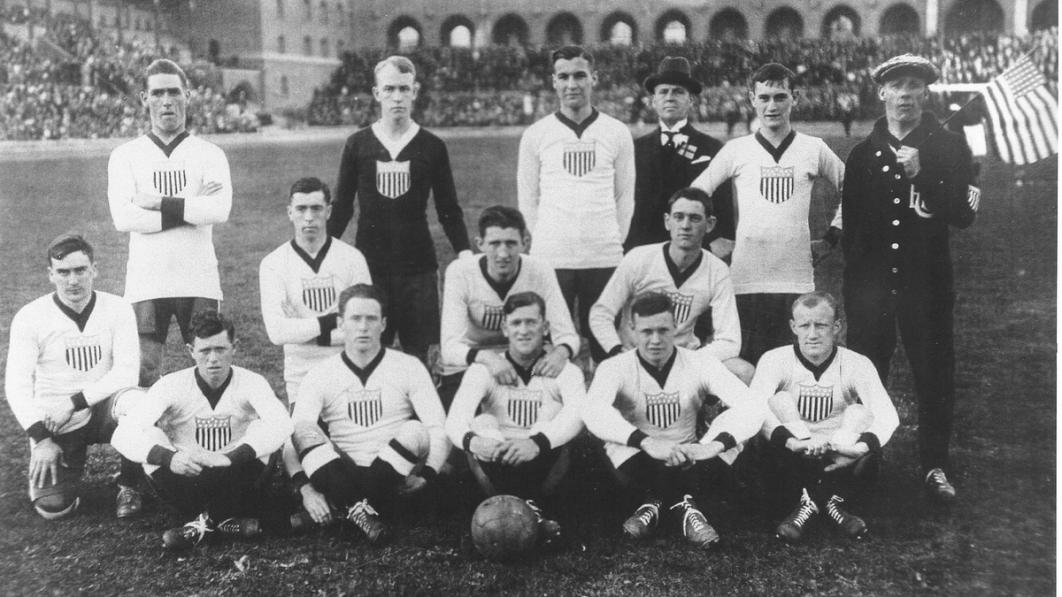
Just one year after the U.S. Soccer Federation was founded at a meeting in New York City on April 5, 1913, the world descended into chaos. Europe’s Great War broke out in July 1914, leading to U.S. involvement by 1917. This was an incredibly volatile period around the world, but it was also transformational for soccer in the United States.
Following the Federation’s founding, the sport experienced unprecedented growth during the 1910s, despite so many playing-aged men being overseas at war. Domestic clubs were beginning to flourish, as evidenced by the creation of the U.S. Open Cup in 1914, while the U.S. Men’s National Team played its first official matches against Sweden and Norway on a Scandinavian tour in 1916.
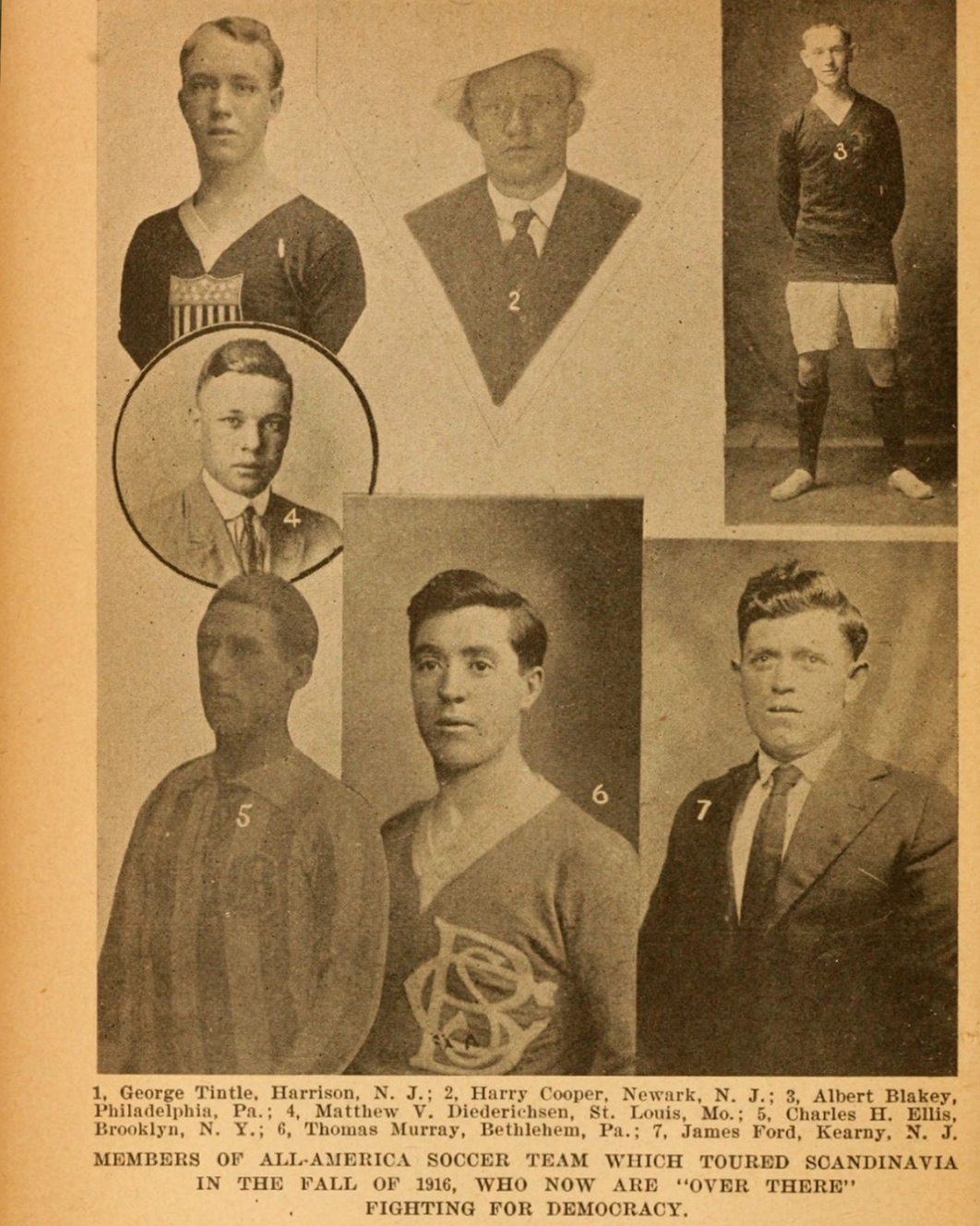
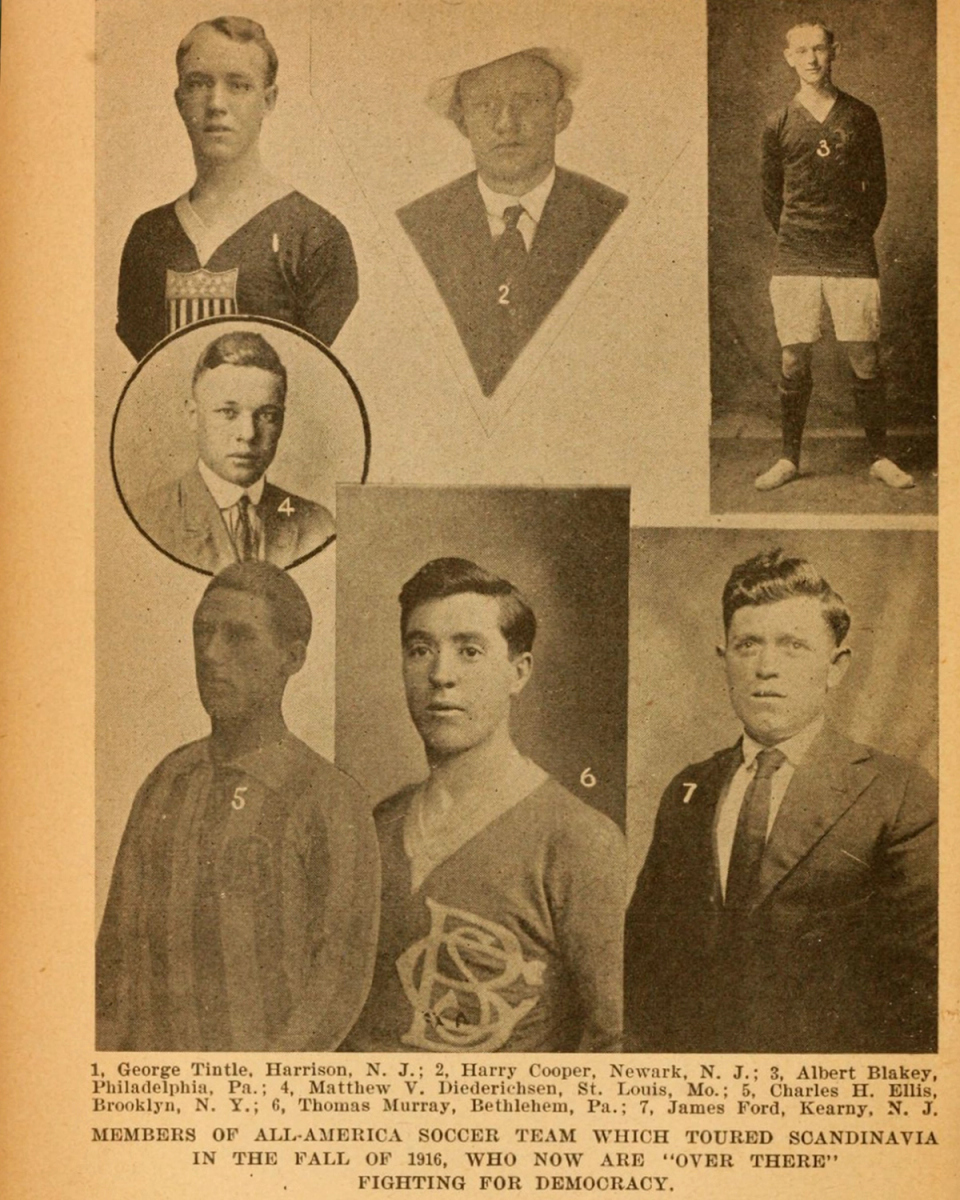
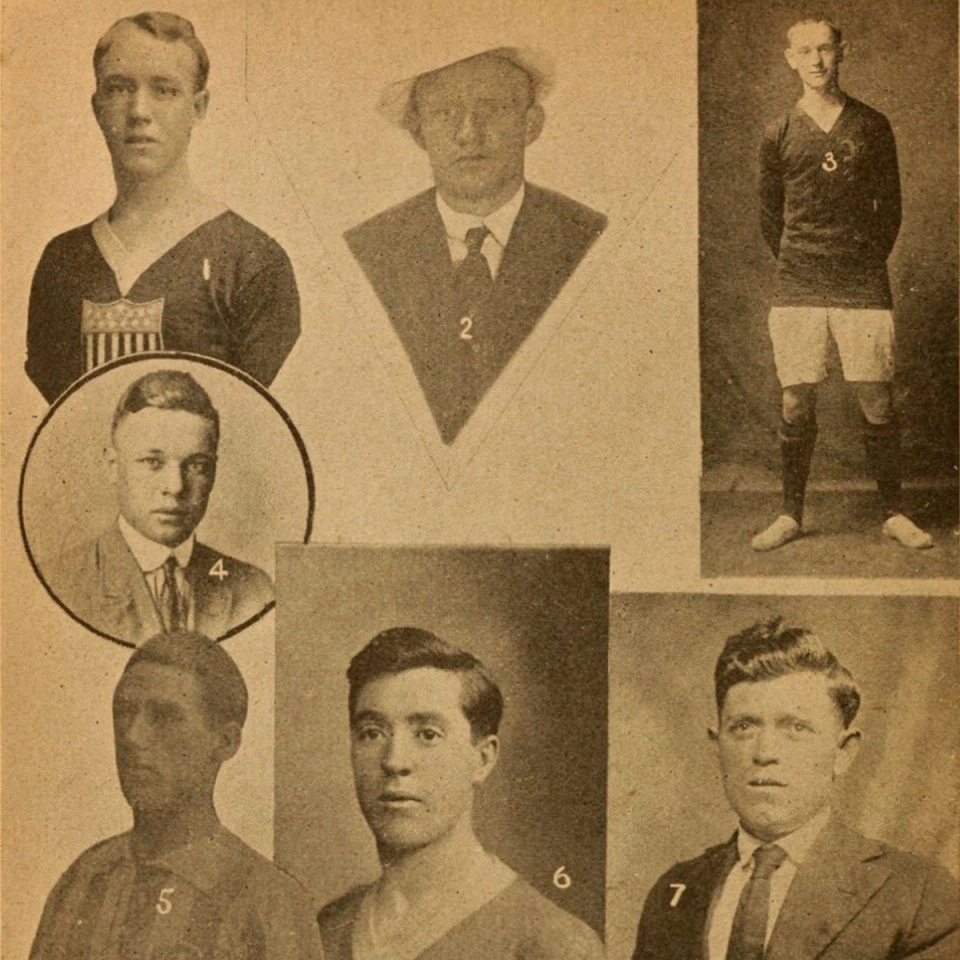
Of the 14 players who represented the Stars and Stripes on that month-long European tour, half of them would return to the continent to fight for democracy in World War I. The 1918-19 edition of Spalding’s annual soccer guide, edited by Thomas Cahill, U.S. Soccer’s executive secretary and the USMNT’s traveling manager during its first trips abroad, documented the military service of the former U.S. Soccer president and seven members of the inaugural USMNT squad. All eight returned home after the war, with most resuming their playing careers.
First U.S. Soccer president, National Soccer Hall of Fame inductee (1950)
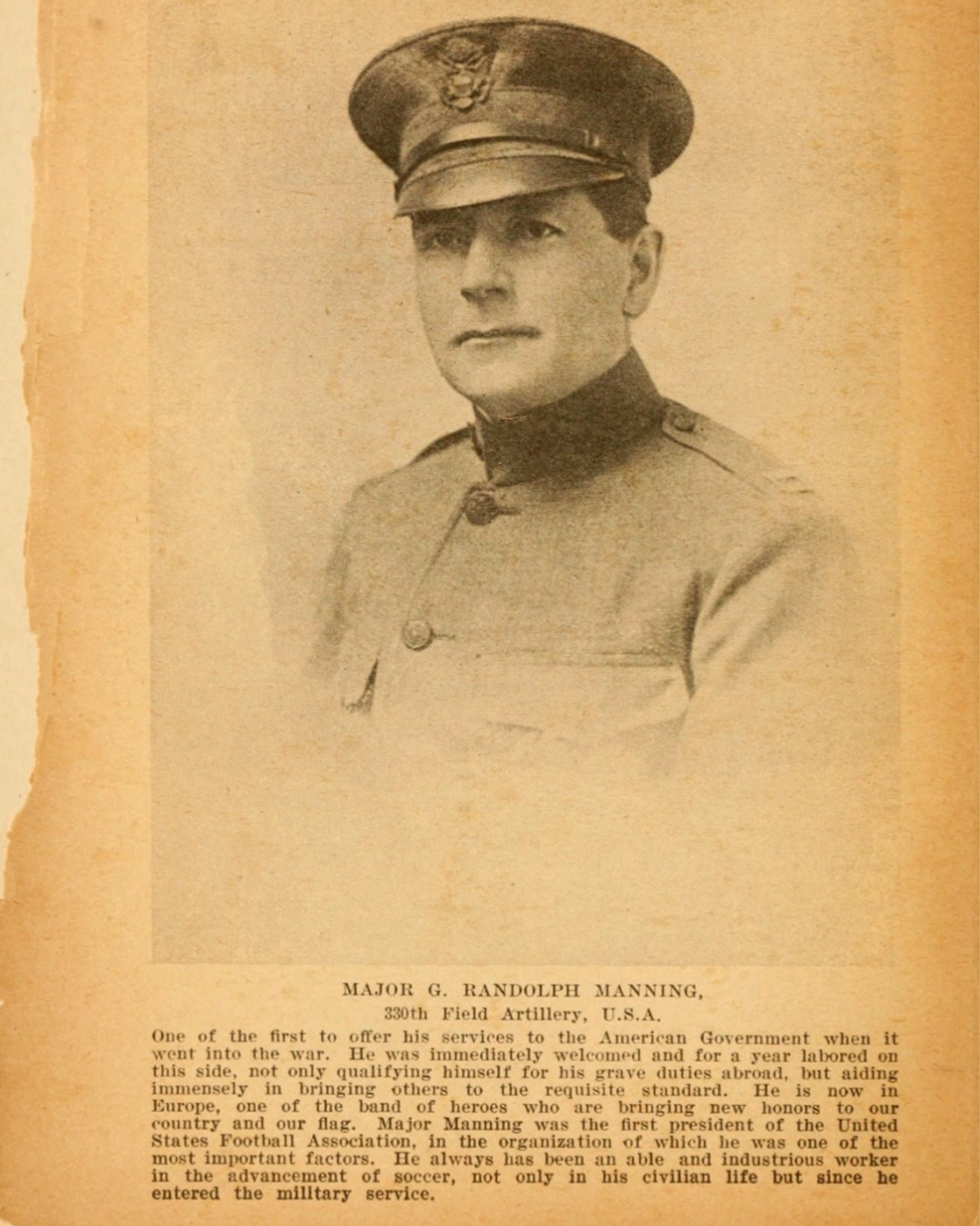
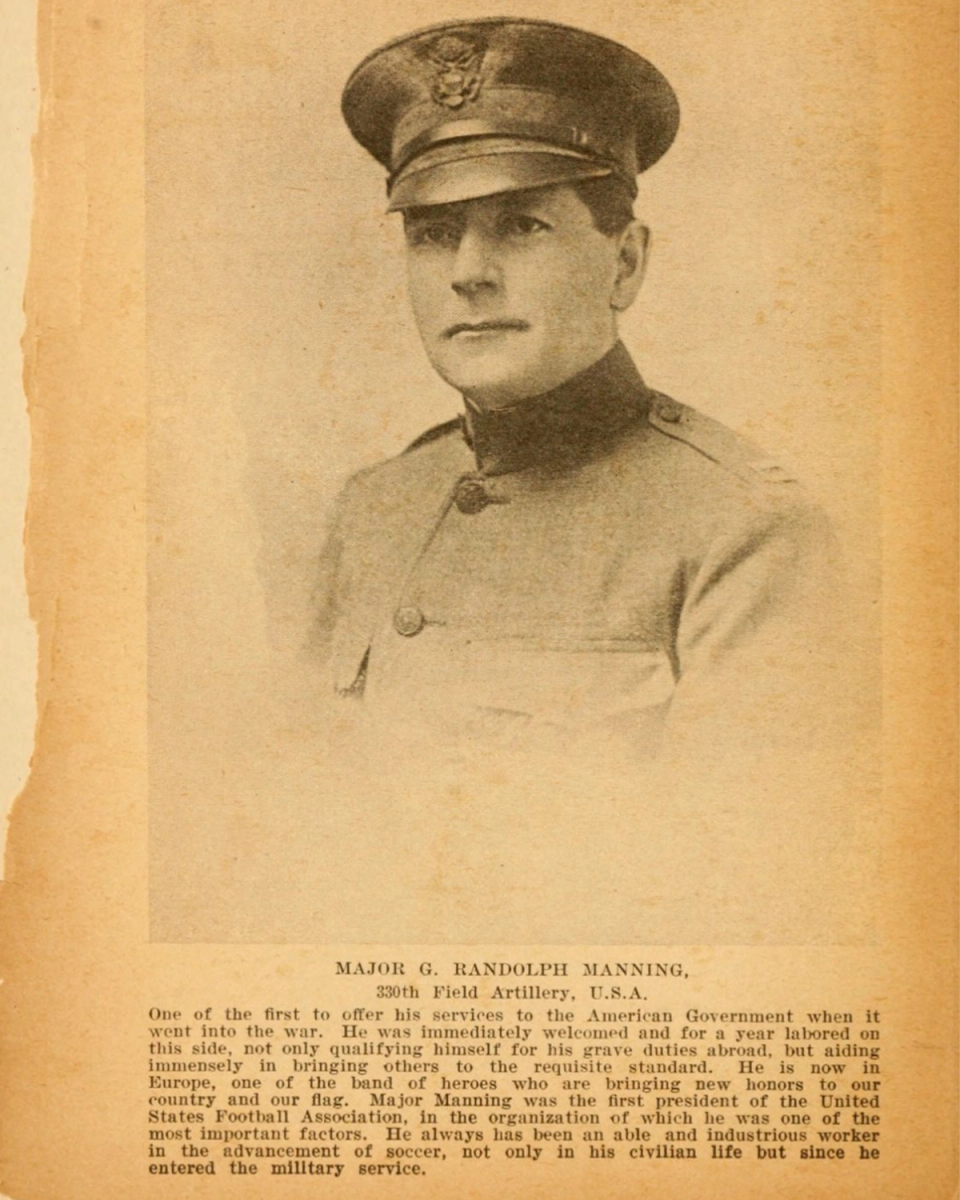
Manning was an English-born physician who served as the first secretary of the German Football Association (DFB) before becoming the first president of the U.S. Soccer Federation. He studied medicine in Germany and played as a forward for German clubs VfB Pankow and Freiburger FC. At VfB Pankow, he played alongside his friend Franz John, who would later found FC Bayern Munich. He immigrated to the United States in 1906 and became involved with soccer at various levels, eventually serving as U.S. Soccer’s first president from 1913 to 1915.
During World War I, Manning served as a Colonel for the U.S. Army Medical Corps. He was honorably discharged in 1919 but remained involved with the Army throughout the following decade. During his time overseas, Manning also oversaw the creation and operation of a soccer league contested by different Army companies. After returning home, Manning became the longtime president of the Southern New York State Football Association. In 1948, he became the first American to serve on the FIFA Council. Manning died in 1953 and is buried at Arlington National Cemetery in Arlington, Va.
First USMNT goalkeeper, National Soccer Hall of Fame inductee (1952)
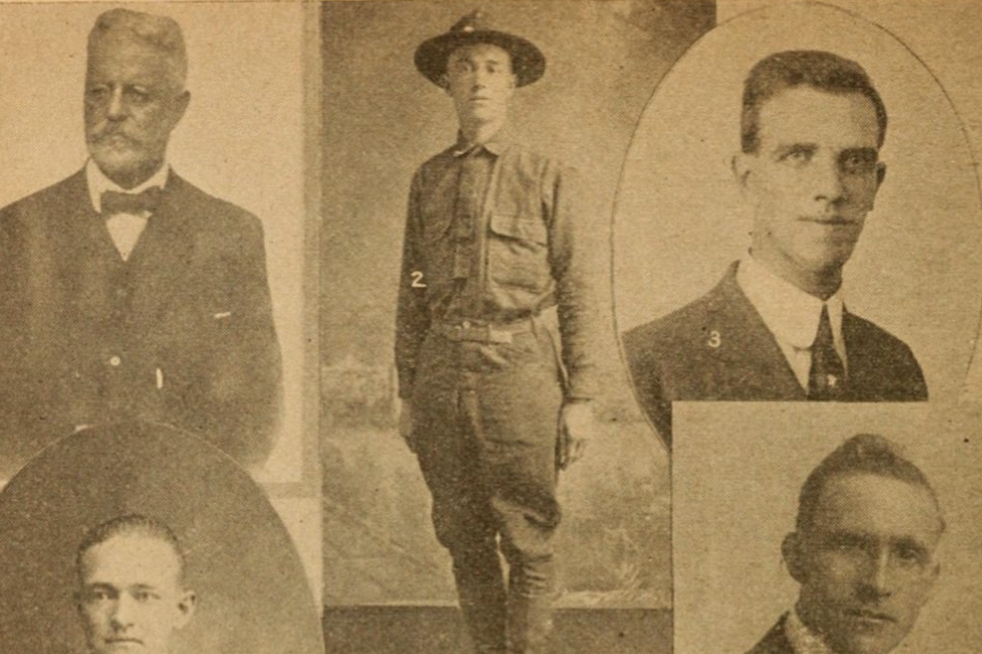
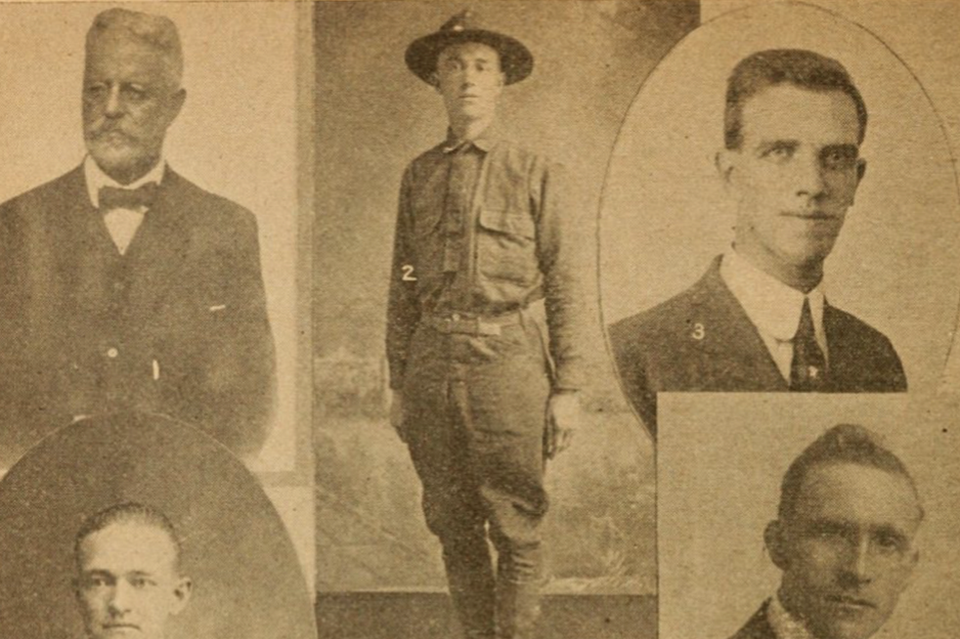
Tintle was the USMNT’s first goalkeeper and played in all six matches of the “All-America” team’s 1916 Scandinavian tour. He helped the team earn a win and a draw in its official matches against Sweden and Norway, respectively, and post a 2W-1L-1D record in four unofficial matches against club all-star teams. Those were the only two official USMNT caps of his career.
Tintle was called up in the first draft and served in the Army’s 29th Infantry alongside USMNT forward James “Bow” Ford in France during World War I. He and Ford survived the Meuse–Argonne Offensive in 1918, the deadliest campaign in U.S. Army history, which resulted in more than 26,000 American deaths. Tintle later returned to the United States and resumed his soccer career. At some point during World War I, he also played alongside Harry Cooper and James Ford on the Camp Dix soccer team outside Trenton, N.J.
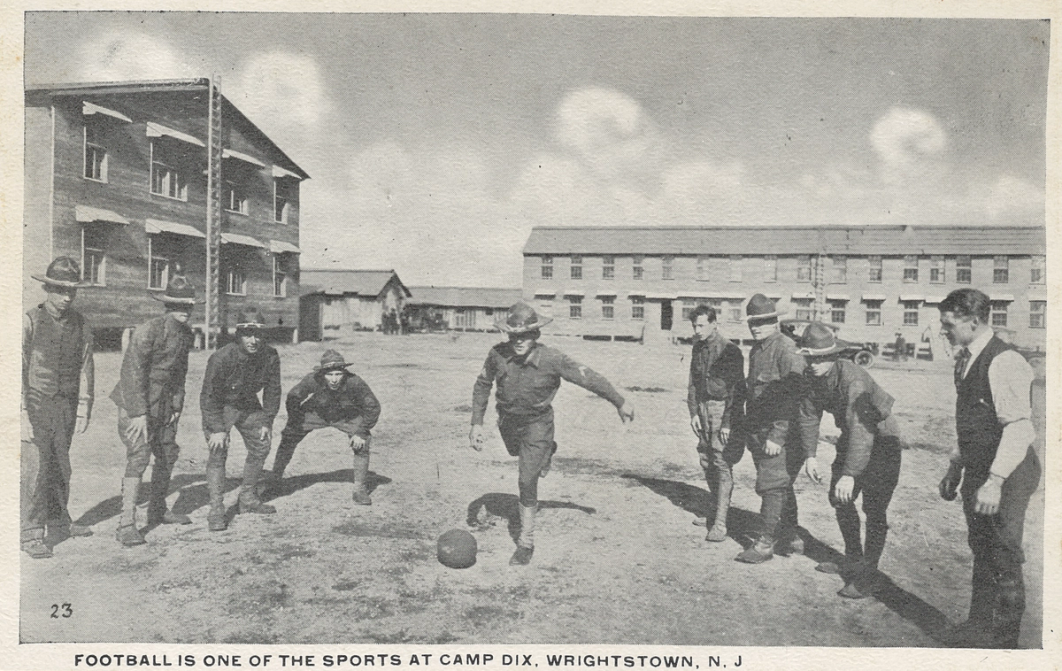
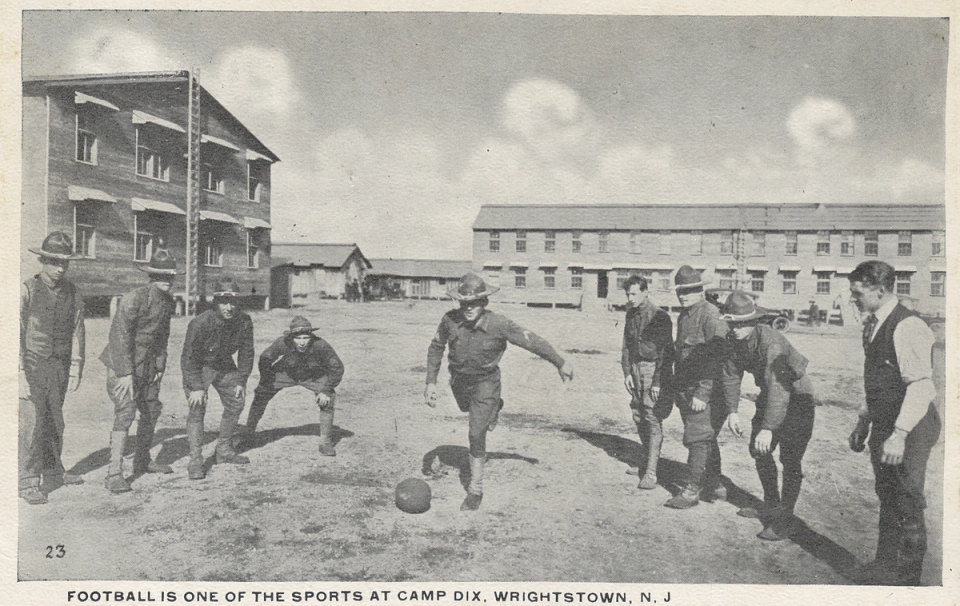
Tintle played for New Jersey clubs Paterson FC and Harrison FC. He returned to Europe twice, first with Bethlehem Steel on its Scandinavian tour, the first international tour by an American club, and later with the All-St. Louis team in 1920. After his playing career, Tintle coached soccer at Harrison High School, served as a member of the Olympic Selection Committee and became captain of the Harrison Fire Department.
Member of the inaugural USMNT squad
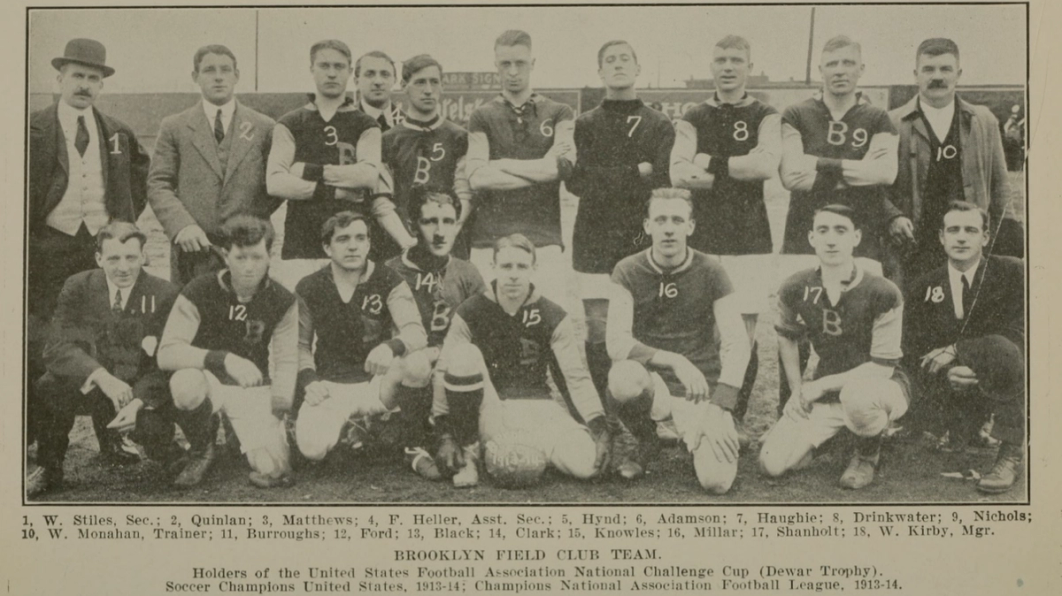
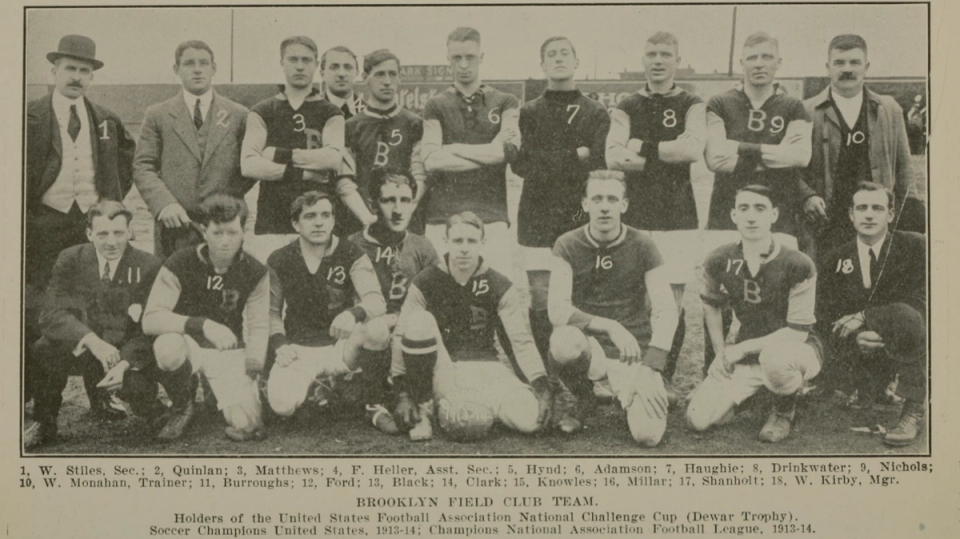
Born in Kearny, N.J., to English immigrants, Ford enjoyed immediate success in the U.S. Open Cup. He scored an 87th-minute winner for Brooklyn Field Club in the 1914 Final, the inaugural edition of the tournament, before scoring again in the 1915 final to help Bethlehem Steel claim the first of its record-tying five titles. During the USMNT’s 1916 Scandinavian tour, Ford played in all six matches and notched a brace in the final match, an unofficial contest against an AIK/Djurgårdens all-star side on Sept. 6.
Ford was drafted and served alongside USMNT goalkeeper George Tintle in the Army’s 29th Infantry in France during World War I. He and Tintle survived the Meuse–Argonne Offensive in 1918 before returning home and continuing their soccer careers. At some point during World War I, Ford also played alongside Harry Cooper and Tintle on the Camp Dix soccer team outside Trenton, N.J. After completing his military service, Ford played for the Kearny Scots, Harrison SC and the New York Giants, among other clubs.
First USMNT player to score in multiple matches
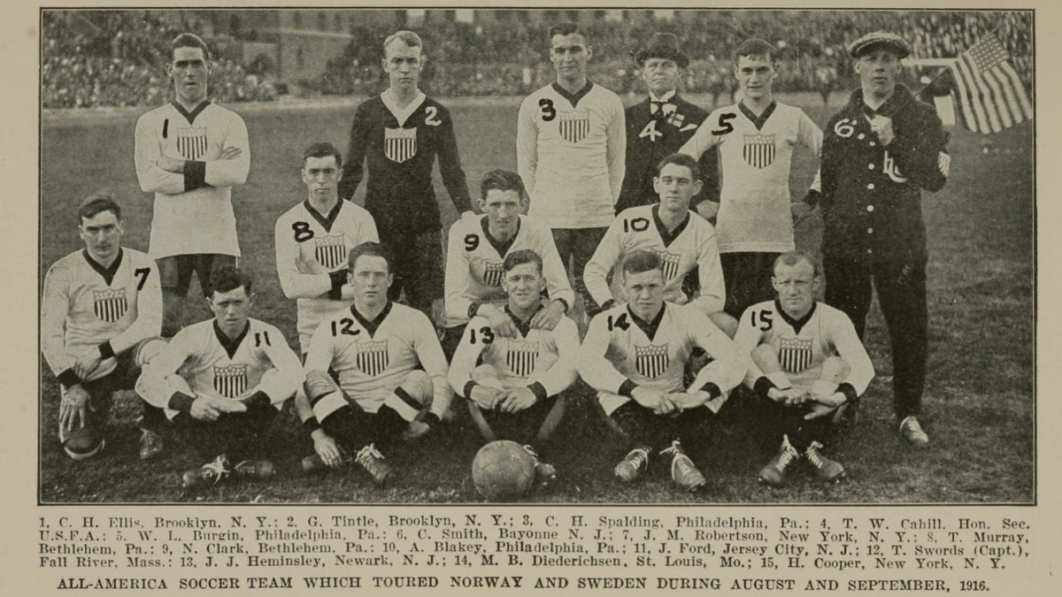
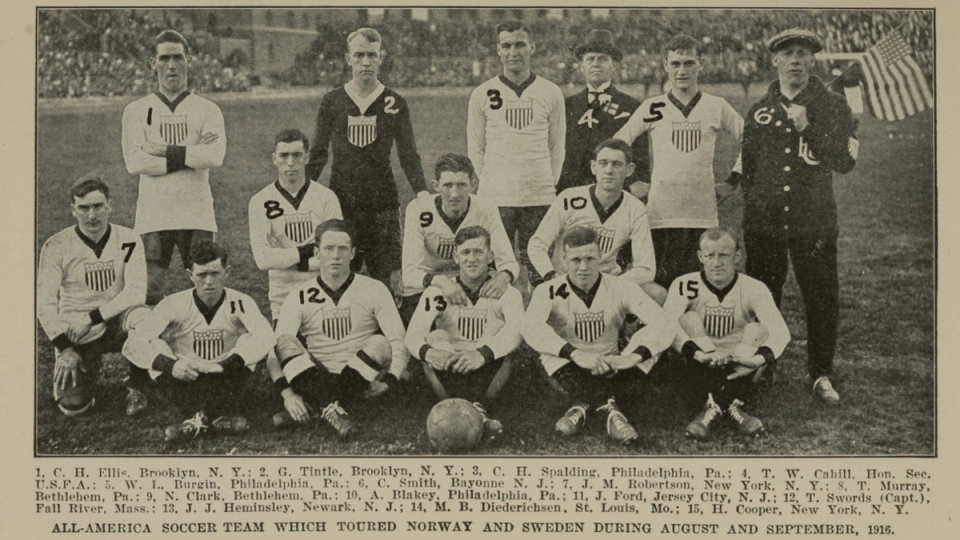
Brooklyn native Charles Ellis made history as the first USMNT player to score in multiple matches. Originally brought on as a reserve, the forward scored in the 53rd minute of the 3-2 win over Sweden before netting the equalizer in the 1-1 draw with Norway. Ellis also scored one of the USMNT’s two goals in a 2-1 victory in unofficial competition against Swedish side Örgryte IS in Gothenburg on Aug. 27. At the end of the six-match Scandinavian tour, Ellis’ three goals made him the USMNT’s leading scorer across the four unofficial and two official matches.
Ellis played club soccer with Columbia Oval and Brooklyn Celtic, finishing as a U.S. Open Cup runner-up with the latter in the tournament’s first two editions, in 1914 and 1915. The forward later joined his USMNT teammates George Tintle and Albert Blakey on the All-St. Louis team’s 1920 Scandinavian tour. Ellis served in the Army during World War I, attaining the rank of Sergeant First Class (SFC) and serving with the 73rd Aero Squadron. He died in 1954 and is buried at Long Island National Cemetery.
Scored the USMNT’s first match-winning goal
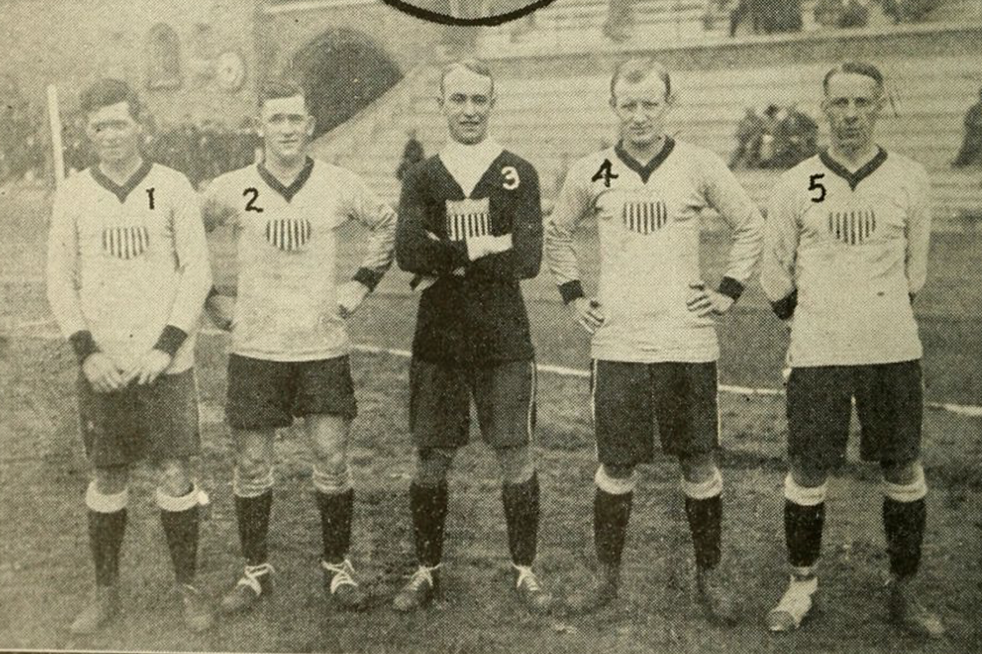
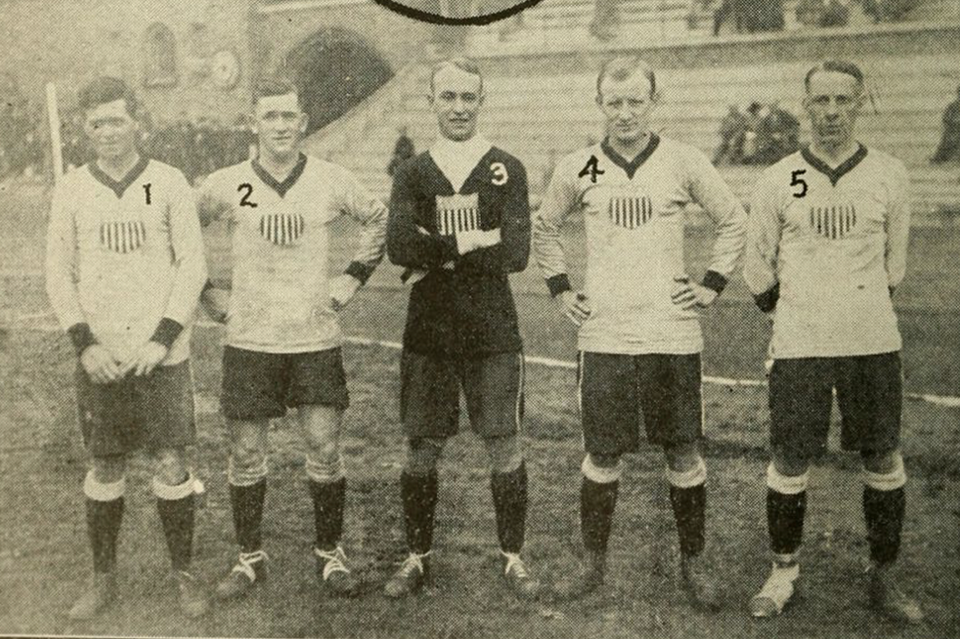
Cooper’s only two USMNT caps came against Sweden and Norway on the 1916 Scandinavian tour. In a vote featuring forward Tommy Swords, defender Neil Clarke and Cooper, Cooper finished just one vote behind Swords, 6-5, in the race to become the USMNT’s inaugural captain. In the USMNT’s first official match, Cooper scored the winning goal in the 68th minute of a 3-2 victory against Sweden. The forward played for several clubs during his decade-long career: New York Field Club, Paterson FC, Harrison FC, and Continentals FC, among others.
Little is known about his military service, although he played alongside George Tintle and James Ford on the Camp Dix soccer team outside Trenton, N.J., at some point during World War I.
Member of the inaugural USMNT squad
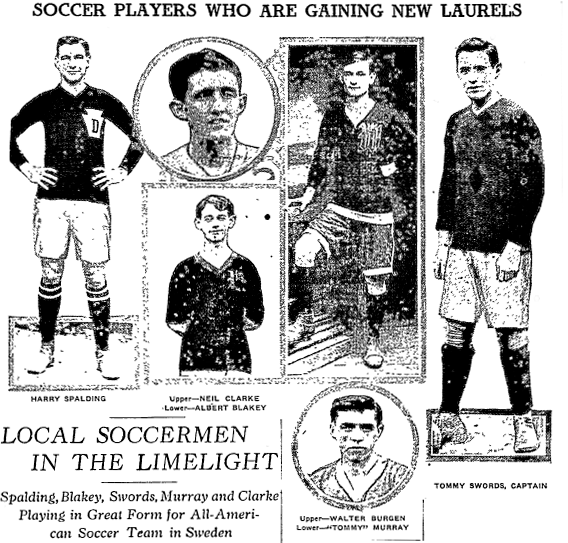
Philadelphia-born Albert Blakey was a young defender who played for Putnam FC and joined a group of eastern Pennsylvania soccer stars on the trip to Europe. The Philadelphia Inquirer praised Blakey and his fellow Philadelphia players:
“All the three players were taught their soccer in this city. Spaulding [sic] graduating from the [Lighthouse] Boys’ Club and who is considered by experts the best full-back in the country. Blakey and Bergin [sic], although not having yet the opportunity of playing in fast company, are players above the average ability, and if supported properly they should uphold the fair name of this city even when pitted against the best that Sweden can produce.”
Blakey made two unofficial appearances with the USMNT, against Stockholm Tigrarna on Aug. 15 and an all-star team representing AIK and Djurgårdens on Aug. 23. However, he did not appear in either of the U.S.’s two official matches against Sweden and Norway. Because substitutions were not permitted under the Laws of the Game at the time, Blakey did not earn an official cap during the 1916 tour.
Little is known about his military service, although, like goalkeeper George Tintle, Blakey returned in time to join Bethlehem Steel on its Scandinavian tour in 1919 and the All-St. Louis team on its tour in 1920.
Member of the inaugural USMNT squad
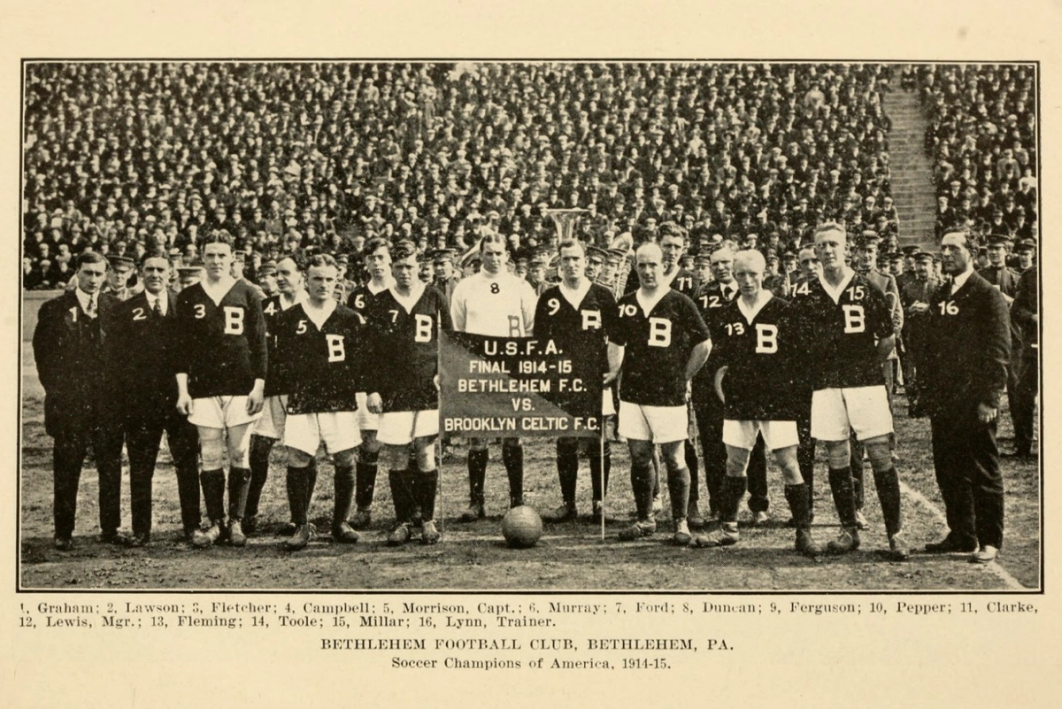
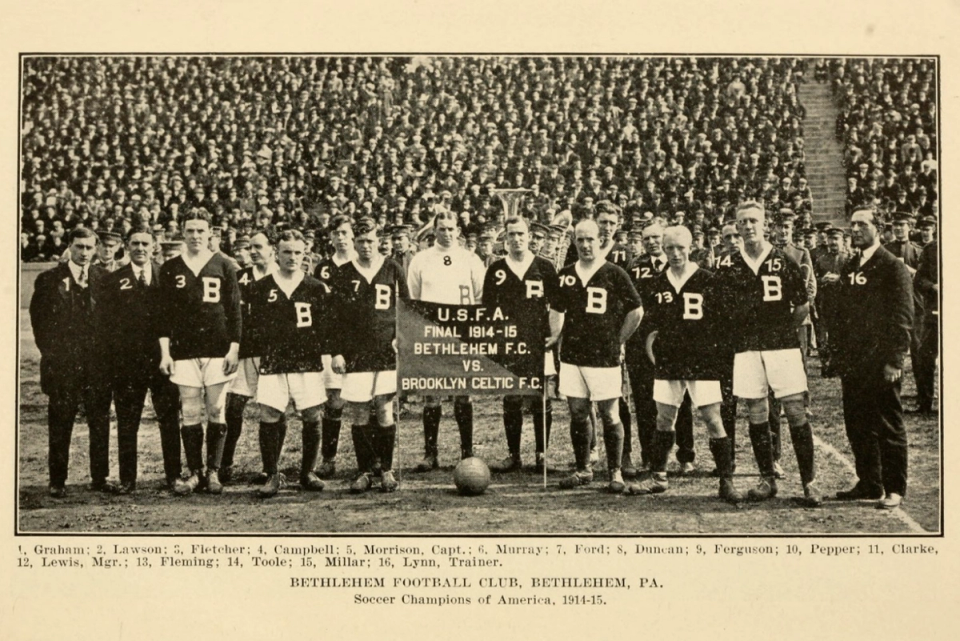
Murray played in five of the six USMNT matches during the Scandinavian tour, including both official matches against Sweden and Norway. The defender was coming off back-to-back U.S. Open Cup titles with Bethlehem Steel (1915 and 1916) when he joined the USMNT on its trip overseas. In addition to playing for Bethlehem Steel, Murray worked as a machinist for the company.
Murray also played for Philadelphia Field Club, Paterson FC, the Brooklyn Wanderers and Indiana Flooring. Little is known about his military service, although, like Blakey, he completed his service in time to rejoin Bethlehem Steel for its 1919 Scandinavian tour.
First USMNT player from outside the Northeast (St. Louis)
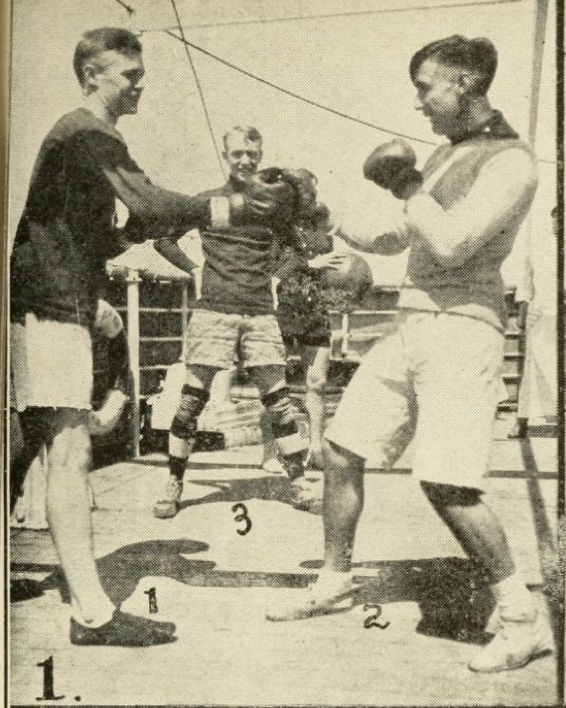
Diederichsen was the only member of the USMNT’s 1916 tour squad from outside the Northeast. He hailed from St. Louis and played for the local club Innisfails FC. In addition to appearing in two of the four unofficial matches, Diederichsen earned one official cap for the USMNT. He made his official debut against Norway on Sept. 3 but was forced off due to injury in the 35th minute.
He was inducted into the St. Louis Soccer Hall of Fame in 1973. Little is known about his military service.