The 85ers: Learn the Story Behind the First USWNT Matches
Michelle Akers, Emily Pickering combined for first goals in U.S. Women’s National Team history; Denise Bender first to wear captain’s armband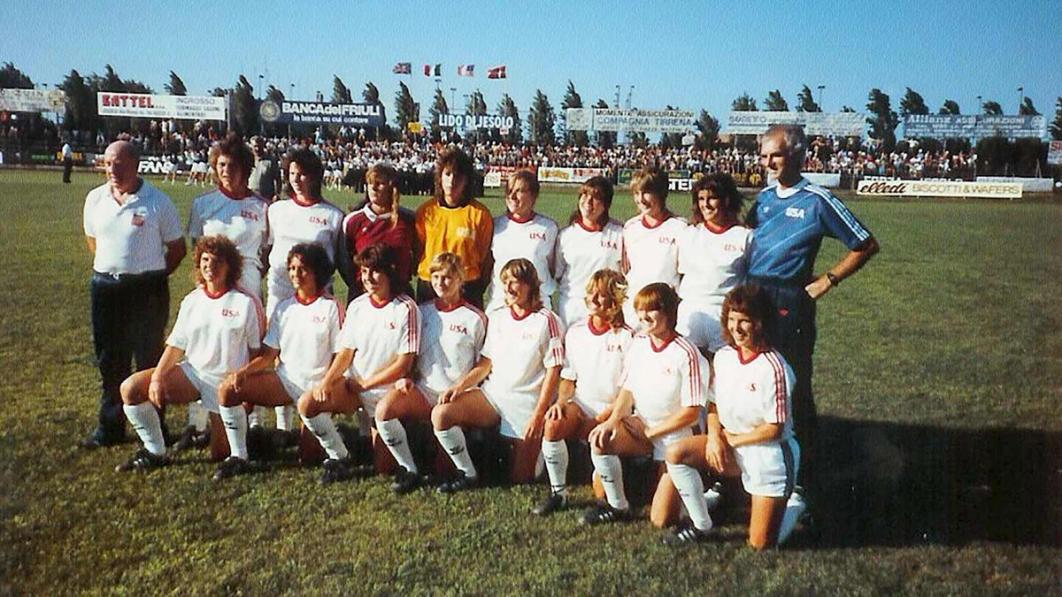
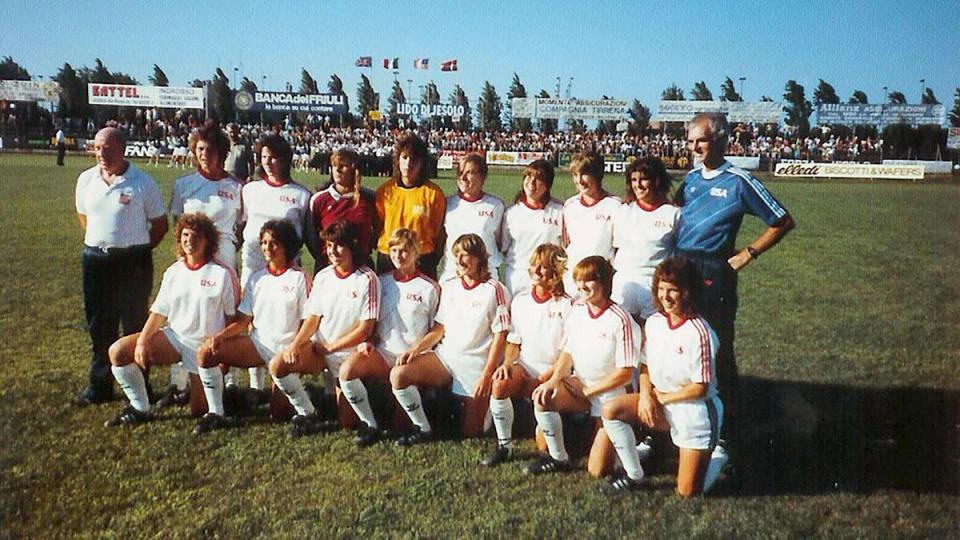
Long before the FIFA Women’s World Cup and Women’s Olympic Football, there was the International Ladies Football Festival better known as Mundialito or “Little World Cup.” And before the U.S. Women’s National Team players were world renowned champions, they were underdogs.
In the summer of 1985, 17 women all under the age of 25 traveled to compete for the U.S. in the tournament in Jesolo, Italy. The team had trained together for only three days and flew to Europe with emergency passports and second-hand men’s jerseys.
The Americans suited up for their first ever international match on Aug. 18 and lost 1-0 to host nation Italy. Defender Denise Bender wore the very first captain’s armband in program history and continued to wear it for all four matches of the tournament.
Bender, a Seattle native, was a standout at the University of Washington and Washington State, where she was inducted into the Soccer Association Hall of Fame in 2006. She won three national women’s club championships with FC Löwenbräu under Mike Ryan, who became the first USWNT head coach. Although the tournament was her only appearance with the team, she helped set the standard for the competitiveness and culture of the future squads.
“I’m proud to be associated with a group of women from the National Team who have put themselves out there as leaders,” Bender told Raising Tomorrow's Champions. “Through the years, and especially in recent years, these women are making bold statements.”
The first goals for the USWNT came in the following match, a 2-2 draw against Denmark. 18-year-old Michelle Akers joined the starting lineup after sitting out of the Italy game with a sprained ankle. Against Denmark, she got on the end of a pass from Emily Pickering and found the back of the net to put the U.S. on the board. Akers told FIFA she didn’t recognize the significance of the goal at the time because she “was just in the moment of trying to win the game.”
The Mundialito gave a glimpse of what was to come from Akers in a U.S. jersey. The attacker continued to play with the National Team throughout her career at the University of Central Florida, where she became a four-time NCAA All-American and the inaugural 1988 Hermann Trophy winner. Her breakthrough year came in 1991 when she scored 39 goals in 26 international appearances and led the U.S. to the first-ever FIFA Women’s World Cup title. She was also a key member of the 1996 Olympics and 1999 World Cup winning teams.
Akers finished her 15-year international career with 107 goals, all starting with the first one in Italy.
“I didn’t connect who we were until we were in Italy,” Akers said. “That’s when it hit me – this is real. We’re the first.”
A few moments after scoring, Akers assisted Pickering for the equalizer. Pickering had just won three NCAA championships with the University of North Carolina Tar Heels before joining the USWNT. The goal against Denmark was the midfielder’s only international score, and she later became the second team captain before retiring in 1992.
The U.S. lost to England and to Denmark in the third-place match to finish last in that tournament. Since then, the USWNT has climbed to the top of women's soccer over the decades, winning four World Cups andfive Olympics, all while showing the same fight and mentality embodied by that 1985 squad.
“We weren't necessarily the most skilled in all the games all of the time, but we definitely wanted it more,” Akers said. “Our team was incredibly tight, and that has been maintained in the national team culture today.”
Every Thursday in March, U.S. Soccer will share a story about various unsung heroes and lesser-known moments in U.S. Women's National Team history for Women's History Month.