Asheville City SC and the Triumph of Community: ‘The Light at the End of the Tunnel Isn't Unattainable’
How the USL League Two side reflects Asheville, N.C.’s recovery, resurgence on and off the pitch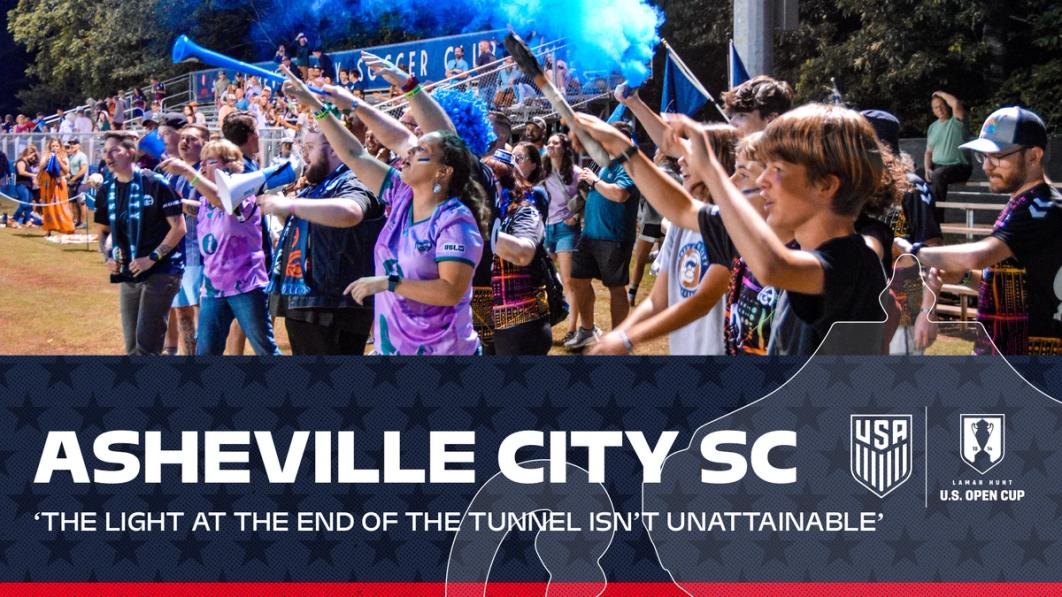
Content Warning: The following article contains material that may be distressing to some audiences.
“You find what you’re looking for in Asheville.”
That’s how Asheville City SC’s Chief Brand Officer and part-owner Tim Blekicki describes his home of over 30 years. Nestled in western North Carolina’s Blue Ridge Mountains at the confluence of the French Broad and Swannanoa Rivers, Asheville has something for everyone.
“If you feel like you're missing something in Florida, in Texas, in South Carolina, in Georgia or New York, you’ll be able to come to Asheville, and if you can't find it already existing, Asheville will offer you a blank canvas to create what you're looking for,” Blekicki explained. “To me, there’s similarity in soccer, whether it be tactics, squad building, or a certain style of play—soccer is a sport that meets you where you are. It doesn't just leave you behind, it takes you along with it. The sport evolves, and Asheville is kind of mirrored in that evolution.”
The city’s local soccer club, Asheville City SC, has been on a tear over the past five years. The decade-old USL League Two side has finished atop the South Central Division in each of the past three seasons, qualified for the USL League Two Playoffs in four straight seasons, and participated in the Lamar Hunt U.S. Open Cup in 2024, 2025, and 2026.
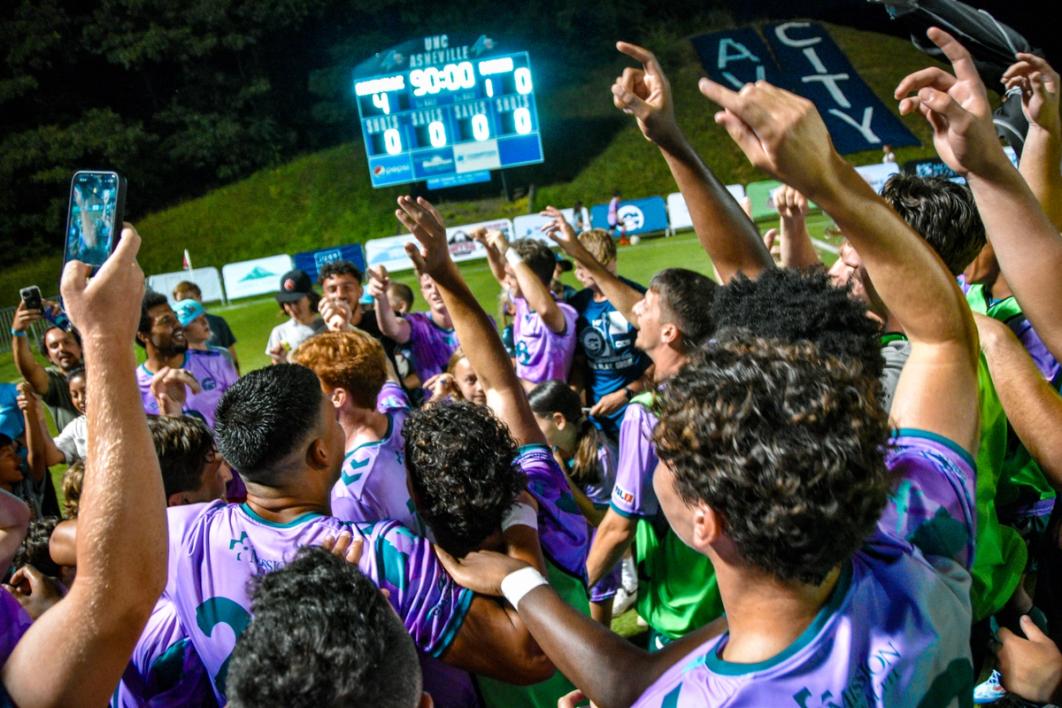
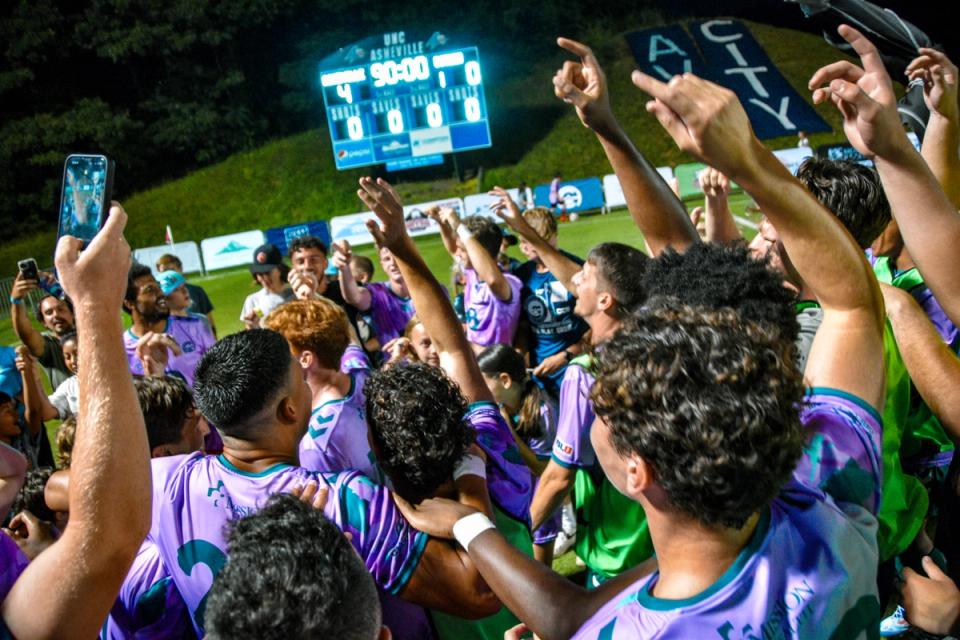
52-14-11 (W-L-D) across all competitions since the COVID-canceled 2020 League Two campaign, the Blues have enjoyed strong performances on the pitch and strong support off it, becoming a pillar of Asheville’s eclectic, community-driven ethos.
“We saw relationships move from dating to marriage. We saw kids being born, and because you saw them at every match, and you saw them every year, it really did very quickly develop a feeling of a family and an enclave within a community,” Blekicki shared. “That was an intersection that I don't necessarily know would have happened organically, and I don't think that devalues that intersection whatsoever.
“I think that's what the sport of soccer does best. It brings together people who otherwise would not have come together, and that's when the magic happens. You're coming together for a similar reason, but you're bringing those different cultures and viewpoints and opinions and thoughts, and when you do that in good faith, awesome stuff happens.”
All that momentum, the yearslong efforts to build a grassroots club by the community, for the community, was nearly derailed after the 2024 season.
In September 2024, the remnants of Hurricane Helene devastated Asheville and surrounding communities in western North Carolina. The region was pummeled by record-breaking rainfall, leading to catastrophic flooding and devastating landslides. The results were catastrophic. Over 100 North Carolinians were dead—Asheville’s Buncombe County accounted for nearly half of the state’s death toll—and total damages approached $60 billion. It was the deadliest and costliest disaster in the state’s history.
Under a city-mandated curfew, Asheville and the surrounding communities were isolated for days as floodwaters engulfed vital roadways, downed trees cut off power and landslides severed water lines. It took months for western North Carolina to even approach a sense of normalcy.
As the communities in western North Carolina approached the daunting, overwhelming task of recovery and rebirth over the subsequent months, the community again felt supported and comforted by the familiar: soccer.
“I've heard from so many community members that even while their power was out, even when they didn't have water, even when they were trapped in that community because of the flooding, they knew they were going to be okay because they heard kids playing soccer in the town square,” Blekicki said of the neighboring community of Swannanoa. “What I think is important about that is, yes, kids are going to be kids, and they're going to play, but soccer is such a simple sport—two people and a ball. That's all you need. That’s where the recovery started. It started with the simplest thing, which was kids having fun with a game.”
Hey everyone, we are finally back online and just wanted to say that we are thinking of all of you and are with you during this very difficult time. (1/3) pic.twitter.com/rU34puIDdp
— Asheville City SC (@AshevilleCitySC) October 1, 2024
As the months of grueling recovery efforts unfolded, an opportunity to escape to the familiar arrived. Thanks to Asheville City SC’s division-topping 2024 League Two campaign, the Blues qualified for the Open Cup for the second consecutive season. Asheville were drawn against USL League One’s Greenville Triumph SC, and the match was slated to be played in Asheville, making it one of the largest sporting events in the region since Hurricane Helene hit.
“Especially with that match, it came on the back of Hurricane Helene,” Blekicki said. “I don't know that there were ever conversations about suspending the season, but it definitely looked different, much like in that COVID year. We had to respect our fans. We had to respect our sponsors. We had a lot of deep, long conversations and introspective moments of what needed to change this season.
“So that Open Cup match was actually a massive celebration of the community coming back together. It was the first large outdoor sporting event in the area—the most well-attended up to that point. Even though the result wasn't what we wanted, it was definitely us saying, ‘We're back. We're still here.’”
That 2025 Open Cup tilt did go the way of the visiting Triumph SC—the Greenville, S.C.-based professionals survived a valiant Asheville effort, advancing 4-3 on penalty kicks after a scoreless 120 minutes of regular and extra time—but on a larger scale, it helped reinvigorate the community and club alike.
Transitioning from Open Cup to league play in 2025, the Blues won their division for the third consecutive season, again qualifying for the Open Cup in 2026. But in the First Round of the 2026 edition—Asheville’s third consecutive appearance in the Open Cup—the club was destined for something different.
Exactly one year after pushing Greenville Triumph SC to the brink of elimination on penalties, the Blues exacted their revenge, securing their first Open Cup victory and first win against a professional opponent in club history with a 3-1 home win against the USL League One powerhouse.
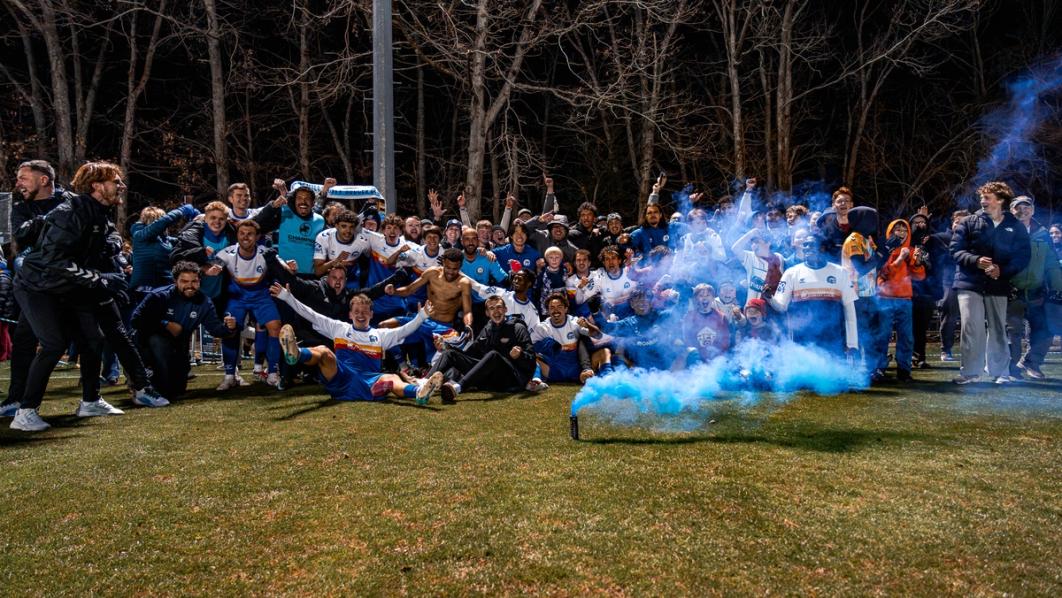
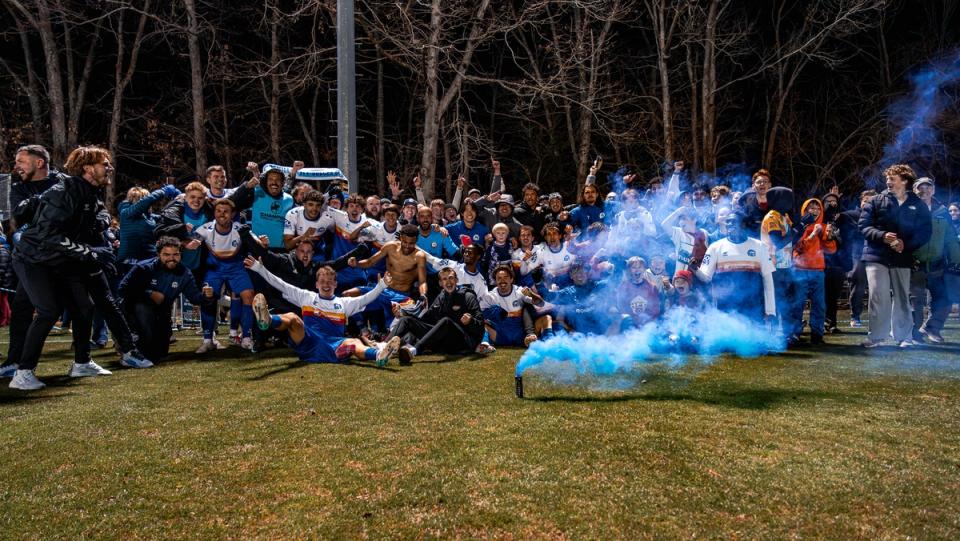
“To play [Greenville] last year and take them to penalties and lose was disappointing, but in that, we set the level—don't underestimate us, we are capable of beating you,” Blekicki said. “Then, literally 365 days since that first match back after Hurricane Helene, to pip them and say, ‘Now, we’re not only back, but now we’re beating you’—that is just so cool.”
As Asheville City SC continues to reach new heights, the club will again be met with the familiar. The Blues are set to face former USL League Two foe and Smoky Mountain Series rival One Knoxville SC in the Second Round of the Open Cup (Tuesday, March 31 at 7 p.m. ET; Paramount+ / CBS Sports Network), aiming to secure the derby’s golden hiking boot trophy for the first time since handing Knoxville a loss in its inaugural match to kick off the 2022 League Two season.
“It means everything,” Blekicki said of Asheville’s chance to shine on a national sporting stage. “Western North Carolina is still recovering. We’re still losing neighbors because of hard decisions that they have to make, whether it's because of their small businesses, or because they’re still waiting on recovery relief, or because infrastructure has failed. Instead of highlighting the bad, this is such an awesome opportunity to highlight the good and show that even in recovery, there can be joy and brightness in community. The light at the end of the tunnel isn't unattainable, and this [match] is a massive step towards that light.
“You’re going to see a lot of smiles. The entire country will get to see a lot of smiles, a lot of joy, a lot of community, a lot of neighbors who have just gone through the worst that you could imagine and still come out together—not jaded, not disappointed in the process, but knowing that they have each other, both on and off the pitch, and that's what people will see for 90 minutes on Tuesday night.”