26 USMNT Moments, Past to Present: Sweet Revenge
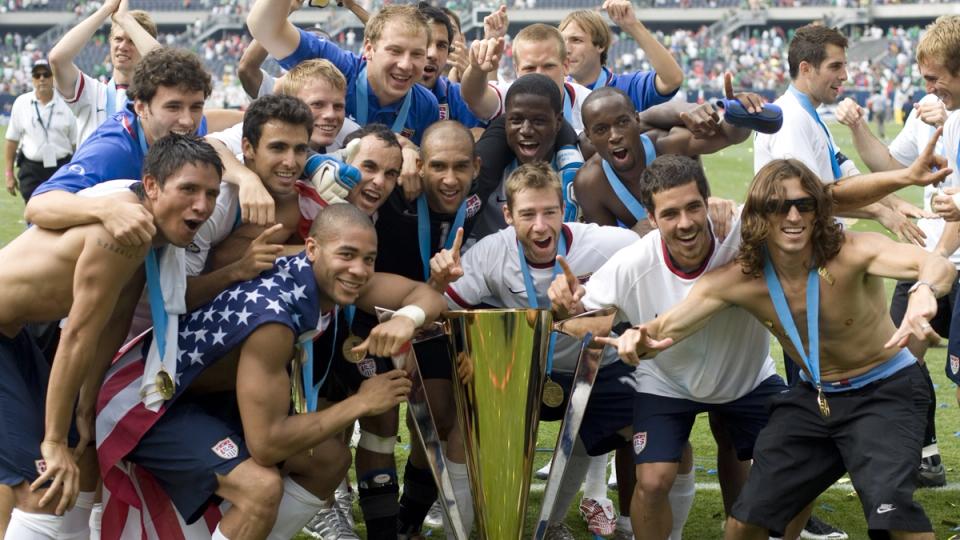
The U.S. Men's National Team tastes sweet revenge against rival Mexico to capture the 2007 Concacaf Gold Cup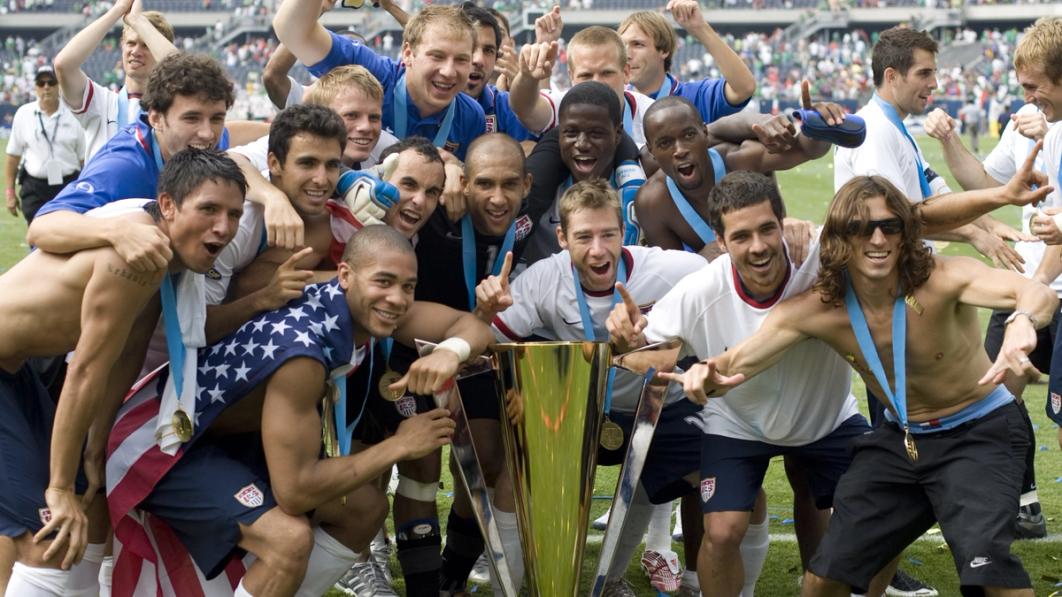
This is 26 USMNT Moments: Past to Present, a U.S. Soccer content series that covers 26 defining moments in U.S. Men's National Team history. From inspired victories to stunning goals, and the stars and hidden heroes who made them possible, each chapter reminds us that our dreams on the pitch are worth chasing. Together, they’ve built toward the biggest moment yet: the 2026 World Cup on home soil.
Trailing 1-0 in the 62nd minute Landon Donovan stood over a penalty kick and Mexico goalkeeper Oswaldo Sánchez stood opposite him. A Concacaf Gold Cup, and a first-ever win over Mexico in the final of that competition, were in the balance.
But actually, Donovan didn’t really stand. He squatted. A posture much more befitting defeat than triumph; it was a rare move to see right before a critical kick. Most players try to big themselves up, to stand with their chests puffed out, to appear as nothing will stop them from putting the ball in the back of the net.
Not Donovan. He crouched, contemplating his next move almost as if he was calculating all the possible futures of his ensuing kick.
“It’s such a mind game,” Donovan said in a 2023 interview. “I know he’s watched every penalty I’ve hit. You’ve gotta depend on your mind to make a quick processing decision.”
The referee’s whistle blew, and Donovan immediately shot up and began his run up. Maybe it was a plot to try and throw off Sánchez in the net. Maybe it was just what felt right at the time.
“In the moment, I got there and it just felt right to hit it to my right,” Donovan said. “He stayed still, so he had clearly done his homework.”
Despite his own pre-shot antics, Sánchez stood his ground as the ball fizzed into the right side of the goal. Goal, United States.
The reaction from play-by-play commentator Max Bretos conveys as much shock as celebration, crescendo and decrescendo to make an iconic soundbite.
“Donovan, yeeeeEEEESSSSSssss!”
The United States and Mexico have shared myriad rivalry matches that will go down in history, but the 2007 Gold Cup Final stands on its own. It wasn’t the first time the two rivals had squared off in the final of Concacaf’s preeminent national team competition, but what made the result special was the way it happened. The goals.
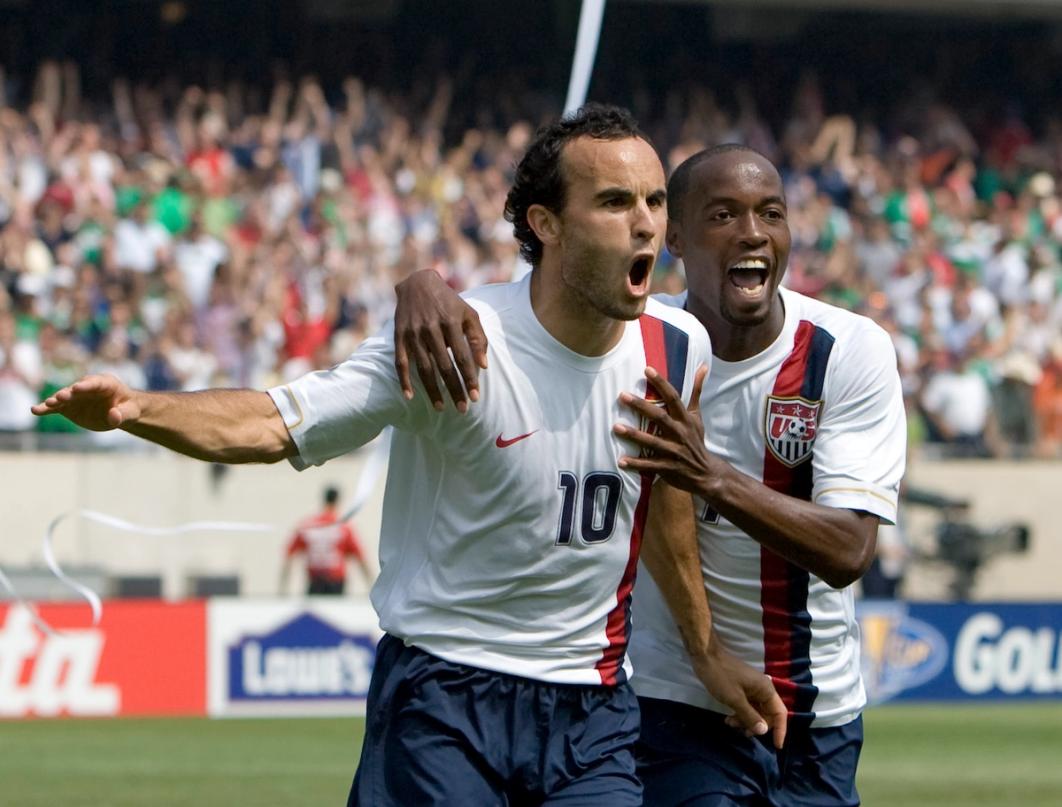
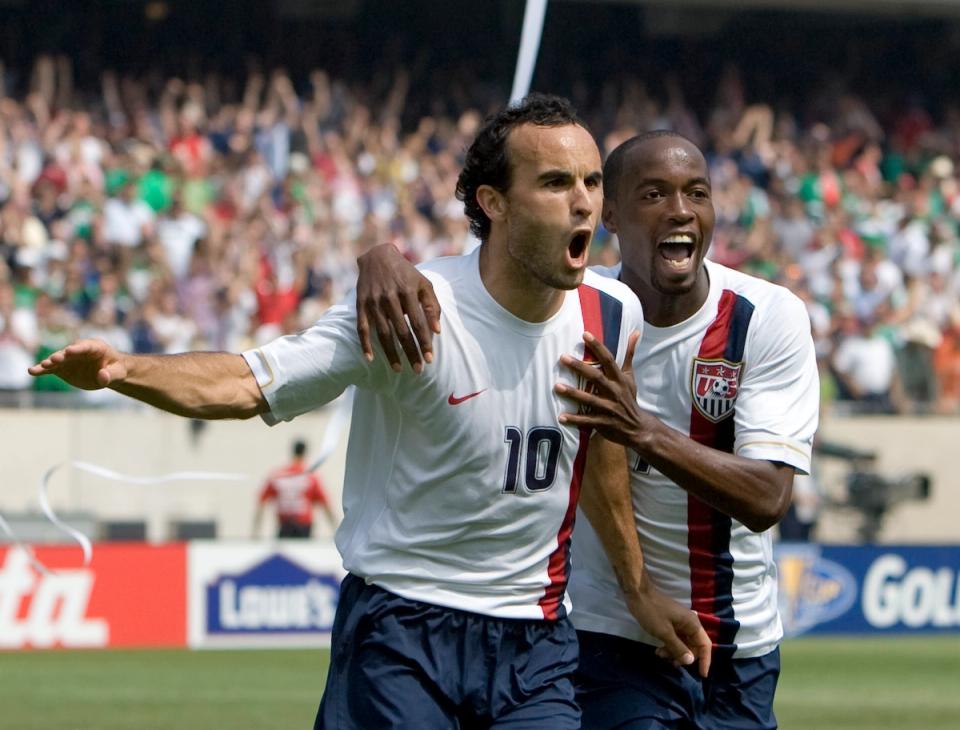
“We know that that’s a huge moment. We can feel it, and just like the growth potential in a World Cup match is huge, these are all huge moments, and we all felt it,” Donovan said. “I think we all understood this is an important moment for U.S. Soccer, and we need to continue to at least compete with, if not beat, Mexico in games like this. Needless to say, we were always up for it.”
That afternoon, June 24, 2007, at Soldier Field in Chicago, the two giants of Concacaf squared off in front of a crowd that heavily favored El Tri. Andrés Guardado opened the scoring in the 44th minute. Mexico tookthe lead into halftime with a goal that made defeat feel all too inevitable for a U.S. team that was looking to reverse their fortunes.
Then came Donovan’s penalty kick to equalize in the 62nd minute, a strike to restore hope. But there was a far more unbelievable shot in store.
In the 73rd minute, the U.S. earned a corner kick, and players took their set piece positions as their head coach Bob Bradley instructed. Benny Feilhaber was one of them.
"I just positioned myself where Bob had placed me at the time, just outside the box on the right side," Benny Feilhaber said. "Landon sent in an out-swinger and Mexico just managed to get their head on it and clear it up in the air toward the area where I was. I was just able to set my body up in the right way to get contact on the ball and put it on the goal. I managed to do that in the nick of time, and when the ball came down, I was in the perfect position for it.”
Earlier that month, Feilhaber scored his first goal for the USMNT in a friendly match. Maybe he was feeling himself as the ball fell out to him, because he swung his foot for a first-time volley out of the air in an attempt of pure optimism. And he caught it perfectly.
"Once it left my foot, I knew I had hit it as clean as I could have,” Feilhaber said. “When it hit the net, it was an unbelievable moment, and even to this day I can't really remember which way I ran to celebrate at first.”
The shot rifled into the net at a speed so quick some of the Mexico defenders hadn’t had a chance to turn their heads. One of the most beautiful and clutch goals in the history of the U.S. Men’s National Team.
Bretos’ call for this one didn’t earn just one booming “YES,” it got two.
The U.S. held their ground to secure the win, one made all that much sweeter by the grind that it took to get there. The U.S. had tried and failed to secure a Gold Cup Final win over their rivals twice before in 1993 and 1998, but 2007 was a righting of wrongs.
“When you play in that final for the Gold Cup, to me, it feels like the biggest game outside of the World Cup,” Donovan said.
Donovan crouched over the ball before the penalty kick. Benny Feilhaber loading up his leg. The images are just as clear today as they were nearly two decades ago. Two unforgettable goals which lifted the USAover Mexico and had an even bigger impact going forward. The final win earned the U.S. a spot in the 2009 Confederations Cup, another iconic campaign that itself supported the USMNT's charge into competitive relevance on the world stage in the late 2000s.
“Every player wanted to give the team the opportunity to play against such good teams one year before the World Cup in South Africa," Feilhaber said. "To be able to play Brazil, Spain, Egypt, and the other top teams that were there — it was one of the big goals. Winning the Gold Cup was big in itself but winning it to move on to play in the Confederations Cup was just as important for us.”
Adam Jasper is the Editorial and Web Coordinator for Atlanta United and has covered soccer since he was in high school. Adam is an alum of the Annenberg School for Communication and Journalism at the University of Southern California. Follow Adam on X.