Behind the Stars & Stripes: A Look into Nike’s Process to Design the Latest National Team Jerseys
U.S. Soccer launched new jerseys on March 16 in the lead-up to the 2026 FIFA World Cup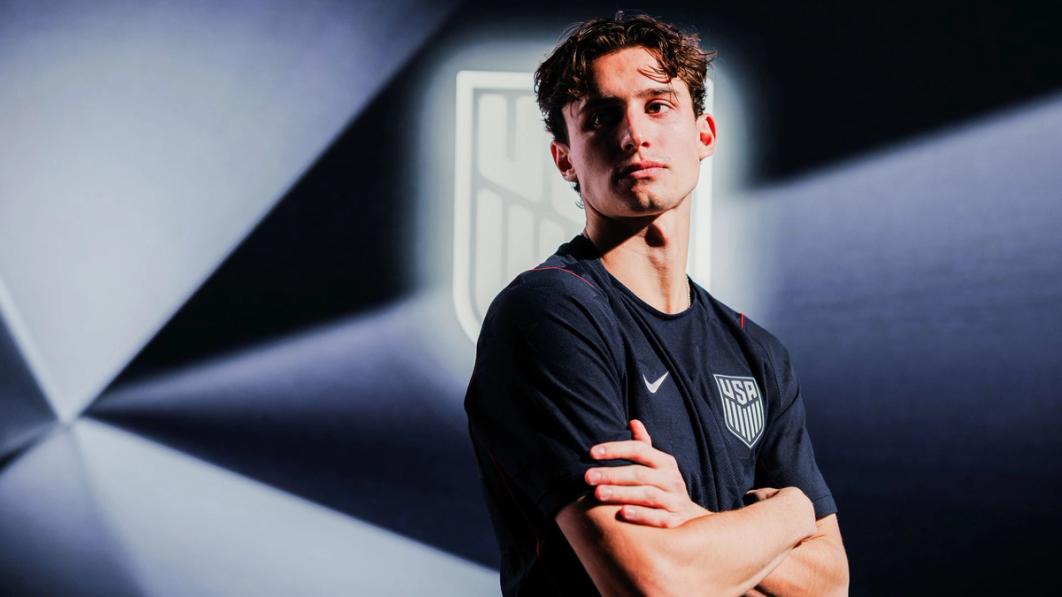
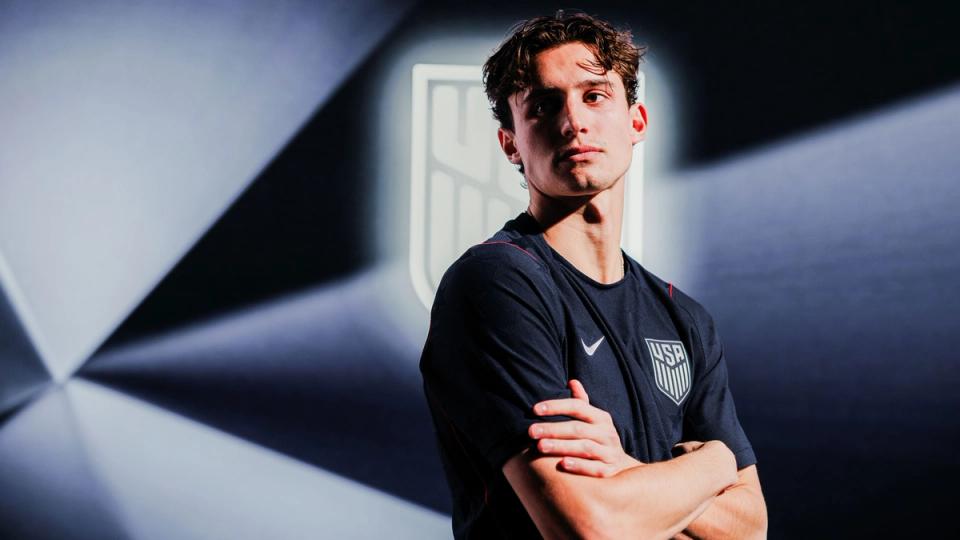
The new U.S. Soccer jerseys are here, and soon the stars and stripes will take the pitch for the first time when the U.S. Men’s National Team faces Belgium and Portugal at Mercedes-Benz Stadium in Atlanta, Ga. later in March.
The story behind these two distinct jerseys showcases a creative collaboration between U.S. Soccer and Nike. The two sides worked together to produce the bold, exquisite jerseys that will feature when the United States hosts the 2026 FIFA World Cup on home soil.
Three Nike designers embedded deep in the process spoke to U.S. Soccer about what it was like to design jerseys for this exact moment in U.S. Soccer history. Global product director Ronnie J. Stewart, color designer Natalie McKeough, and apparel graphic designer Yaz Rosete talked through their process and shared some behind-the-scenes insights on all the thought and care it took to deliver the product you see in stores – and soon, in the stands.
Two of the designers – Stewart and Rosete – bring more behind-the-scenes insights as the featured guests on this week’s episode of the U.S. Soccer Podcast:
The jerseys launched on March 16, 2026, but the process began years ago – all the way to spring of 2023.
Discover, ideate and go. This method that Nike refers to as “DIG” describes the research and planning phase of the process that goes on to guide their design and execution. In the beginning, Nike traveled to different cities around the country to talk to soccer fans and learn more about what they wanted to see out of the next design. Nike received a variety of answers but also found some common themes to drive their ideation.
The most rewarding part of Nike’s “DIG” was getting to talk to players from the U.S. Men’s National Team. This part of the process, according to all three from Nike, was among their favorites and most valuable. Previous cycles occurred during Covid, and player input during that time came over Zoom or long-distance. This time around, Nike designers were in the room with U.S. Men’s National Team players such as Weston McKennie, Matt Turner, Tyler Adams and Ricardo Pepi. Nike felt the team’s vibes, observed how teammates interact with each other, and even picked up some details that were included in the design.
The U.S. Men’s National Team was an integral and active part of the process. Through various in-person sessions and workshops with Nike, players provided feedback, answered questions, and shared inspiration.
“The players need to feel what they’re wearing,” Stewart said. “Empowering the athlete is at the center of what we want to do.”
Both the U.S. Men’s and Women’s National Teams were invited to participate in the process for the 2026 launch. As large as this moment is for the Men’s National Team, the input on these kits belonged solely to them. The U.S. Women’s National Team politely declined their involvement for this cycle, allowing the Men’s National Team to own the moment.
In similar fashion, the opposite happened when both teams were invited to participate in the jerseys ahead of the 2027 FIFA Women’s World Cup. The men declined, so that process will belong purely to USWNT head coach Emma Hayes and her players. The two groups, Men’s and Women’s National Team members, will both collaborate with Nike ahead of 2028 for the Olympic Games in Los Angeles.
Red, white and blue. The designers said the colors of the American flag might seem like an obvious starting point for the kit design but deciding on what shade of those colors involved deeper thought and analysis.
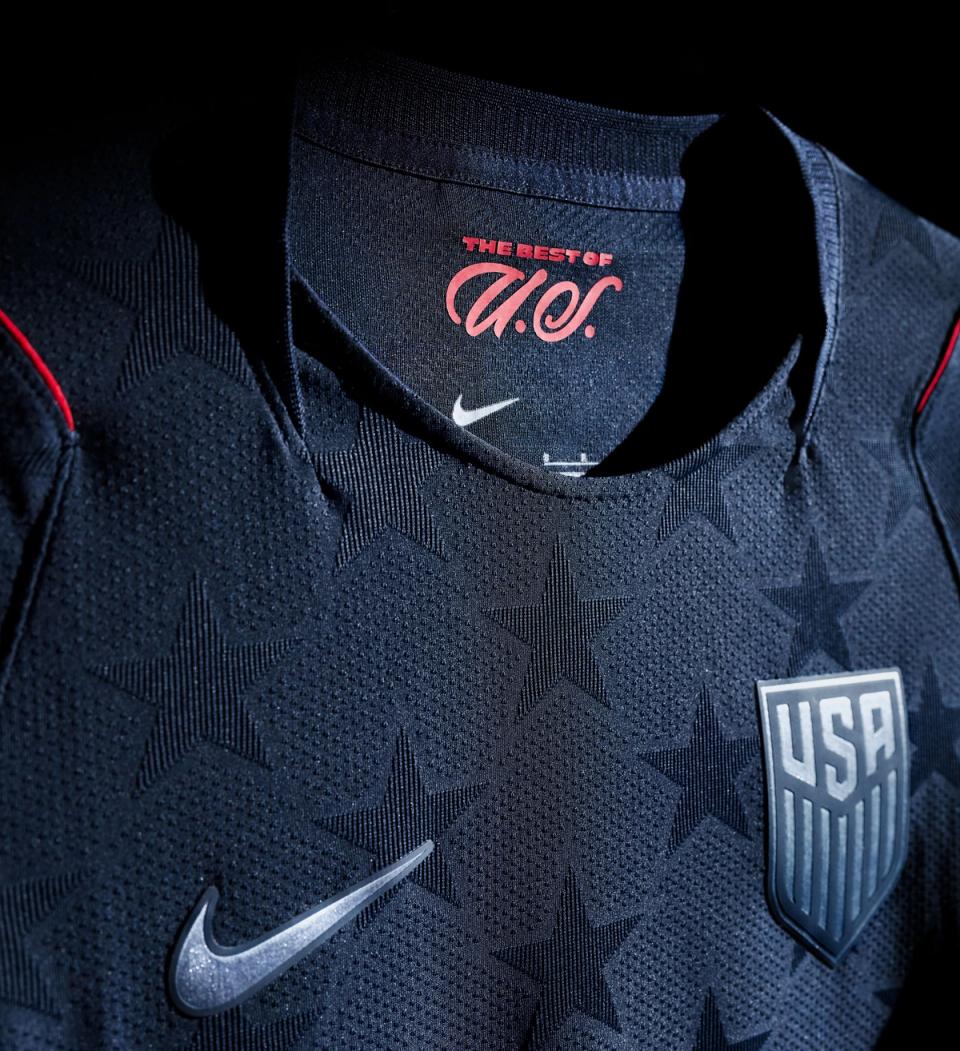
When Nike asked players what they wanted to feel with their jerseys, players chose words such as sophisticated, luxurious and swag. With those words in mind, Nike opted for a rich color palette, starting with the star jersey. The primary color is a deep navy blue – so blue it almost looks black. From far away, the jersey appears solid but up close and under certain lights, the knit stars shine. The chrome element was inspired by flashy jewelry that designers noticed on the players.
“What a way to bring the swag out of the star jersey,” McKeough said.

Another important piece of feedback Nike received was how much the fans motivate the team. During matches, players feel a great sense of pride when they look up into the stands and see their fans in the crowd.
“We’re very motivated when people are cheering us on,” the players reportedly told Nike. “It’d be great to be able to spot them in the crowd.”
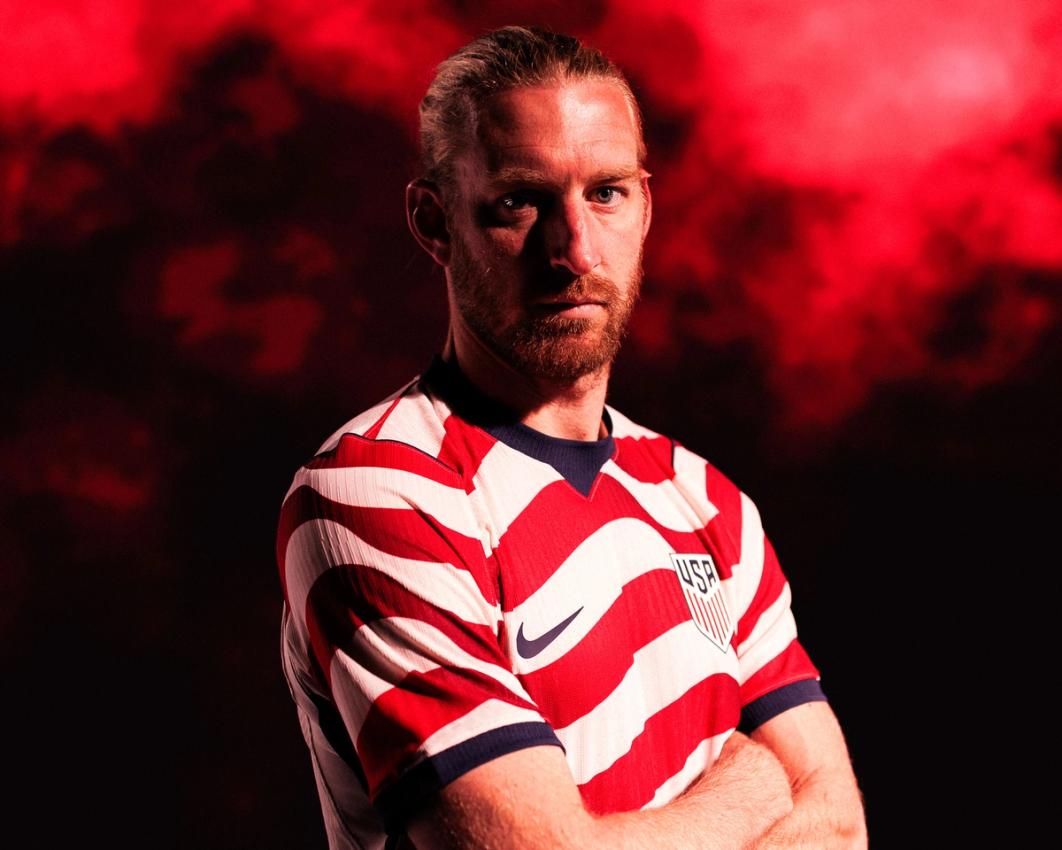
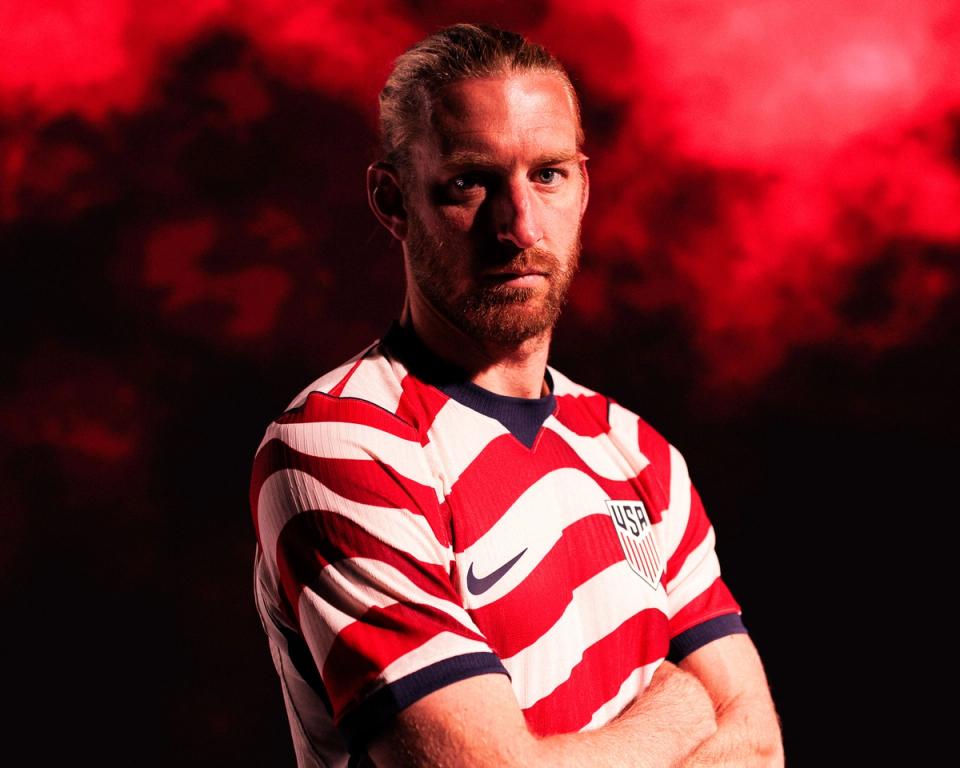
Enter the stripe kit. The way that Brazil dons yellow, blue, and white, Netherlands features orange and Croatia embodies a checkerboard pattern, the red-white stripes are one-of-a-kind; no other Federation in the world has a symbol so recognizable. If you covered the crest, a jersey with horizontal red-white stripes unequivocally represents no other country but the USA. The slight curve of the stripes evokes movement and energy, like the American flag waving in the wind. And in an interesting twist, the gradient in the stripes extends to the crest as well – a part of the jersey which is usually untouchable.
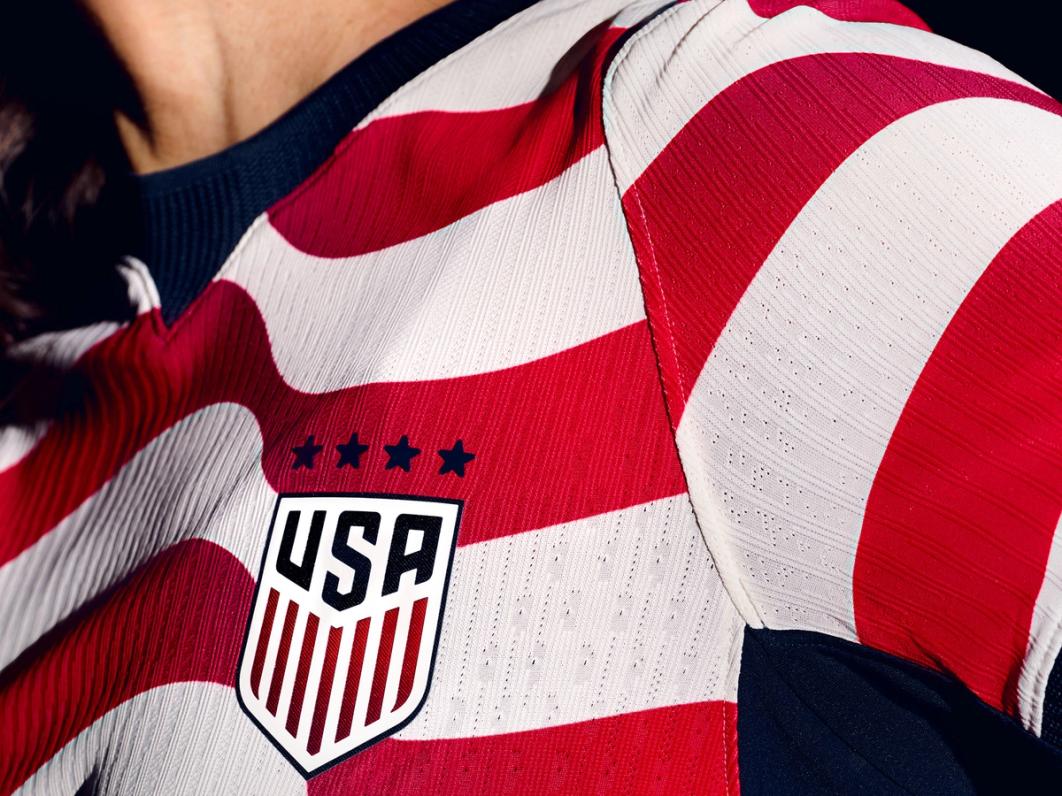
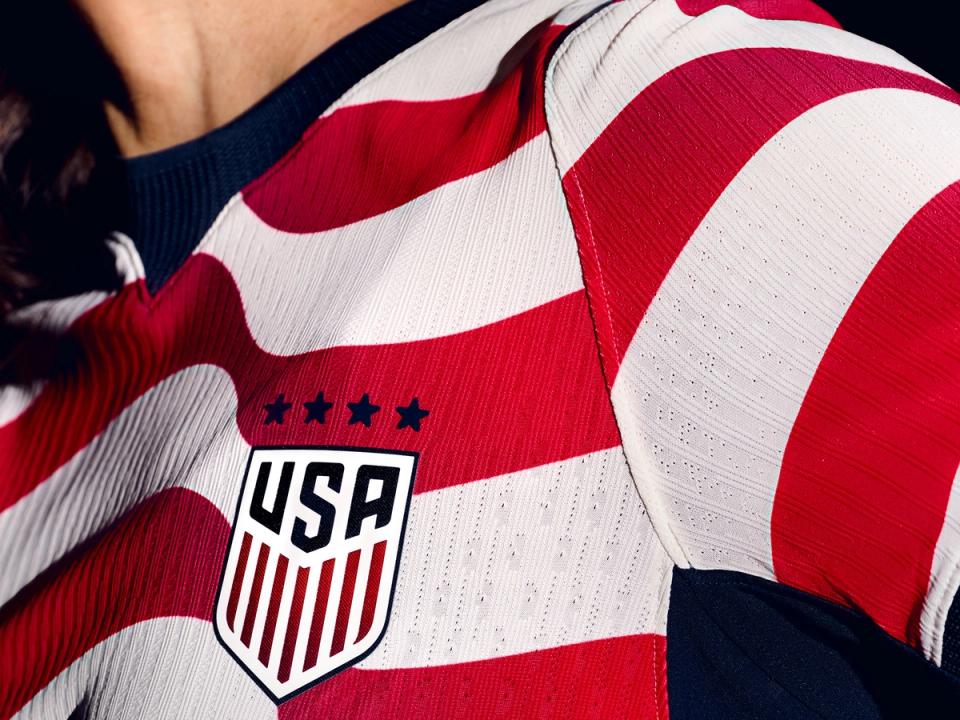
The jerseys will serve as the primary look for the U.S. Men’s National Team at an incredible moment in history as the United States, along with Canada and Mexico, host the 2026 FIFA World Cup. Millions of eyes will be on the stars and stripes, not only on the pitch but also as a host nation.
Nike designers asked the USMNT players about previous U.S. jerseys they liked and admired, though the intention from the beginning was to stay true to Nike’s mantra: innovate and inspire.
“Updating something that is recognizable is our way of honoring the past but still creating something new,” McKeough said.
These jerseys honor the heritage of previous looks, including the “Waldo” kit from 2012 that prominently features horizontal stripes. The 2026 edition serves as a reinvention, which was important to both Nike and U.S. Soccer. The partners didn’t approach the design seeking to pay homage to a former kit – the goal was to create a look that will last and a recognizable identity to build on in the future.
“The jersey honors heritage but is also a reinvention,” Rosete said.