Four Decades Later, St. Louis Is Back on the Cusp of U.S. Open Cup Glory
St. Louis CITY SC is one win away from delivering the city its 11th U.S. Open Cup title—its first since the spunky Busch Seniors won it all in ‘88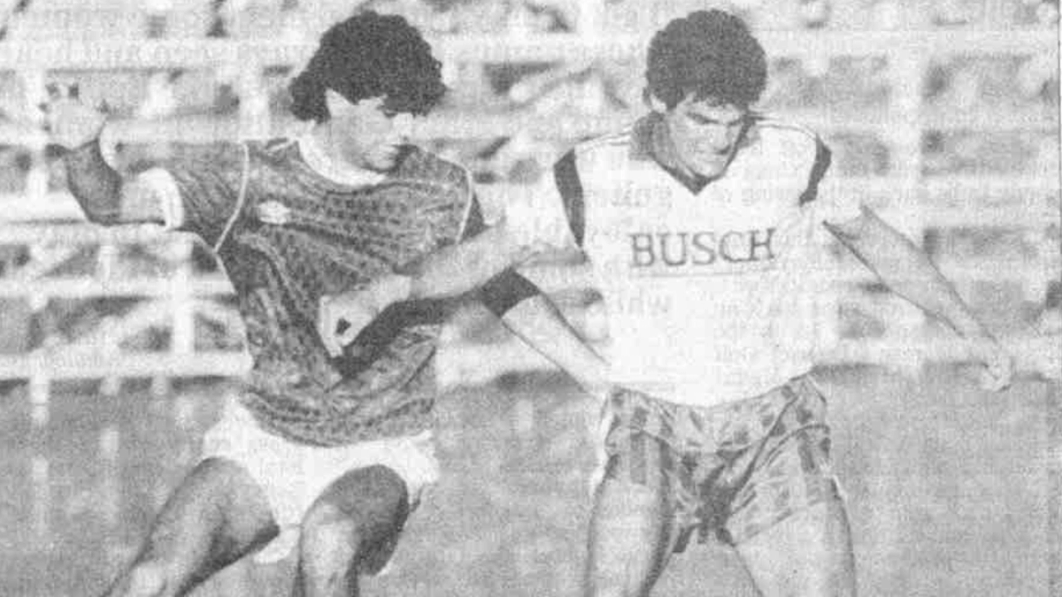
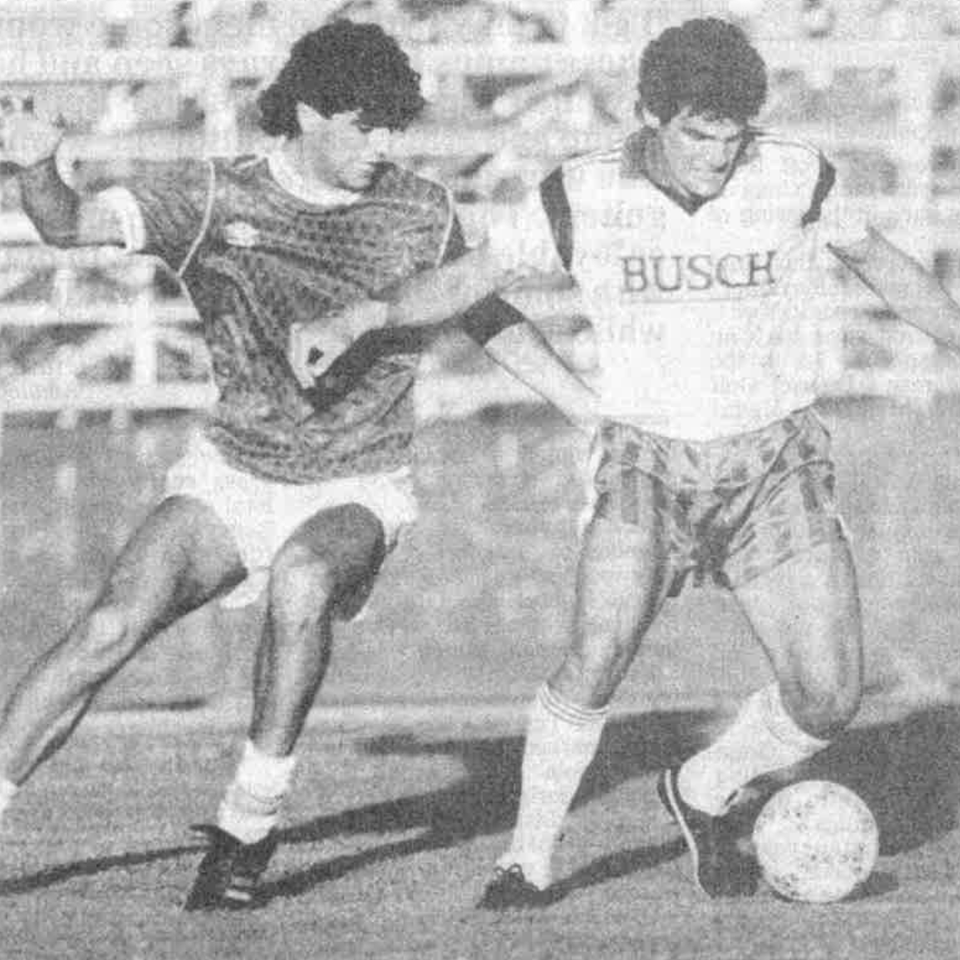
By the time St. Louis CITY SC takes the pitch for the 2026 Lamar Hunt U.S. Open Cup Final on Wednesday, it will have been more than 38 years since a team from St. Louis appeared in the Open Cup Final. That team—the St. Louis Busch Seniors of 1988—was the last of 10 from St. Louis to be crowned club national champions of the United States, and the gap of nearly four decades without a St. Louisan winner is by far the longest in the tournament’s 112-year history.
That drought may soon be nearing its conclusion, as St. Louis reemerged on the national soccer stage, as evidenced by the arrival of Major League Soccer (MLS) side St. Louis CITY SC, the opening of the 22,423-seat Energizer Park 10-time NCAA champion Saint Louis University’s return to the NCAA Men’s College Cup in 2025, and Tim Ream becoming the first St. Louis native to captain the U.S. Men’s National Team at the FIFA World Cup since National Soccer Hall of Famer Harry Keough in 1950.
On top of all of that, St. Louis CITY SC—which recently posted an MLS-record 21-match unbeaten streak across all competitions—is nearing its first trophy in club history, which would fittingly come from a tournament that has been rightfully venerated in St. Louis for more than a century.
“I think the reason [the Open Cup] is still of interest in St. Louis is because of all the connections to an Open Cup team back in the day,” St. Louis soccer historian and Missouri Sports Hall of Famer Dave Lange explained. “It means something. I think it means more to St. Louis than to other cities because they don't have the same history or the same connections.”
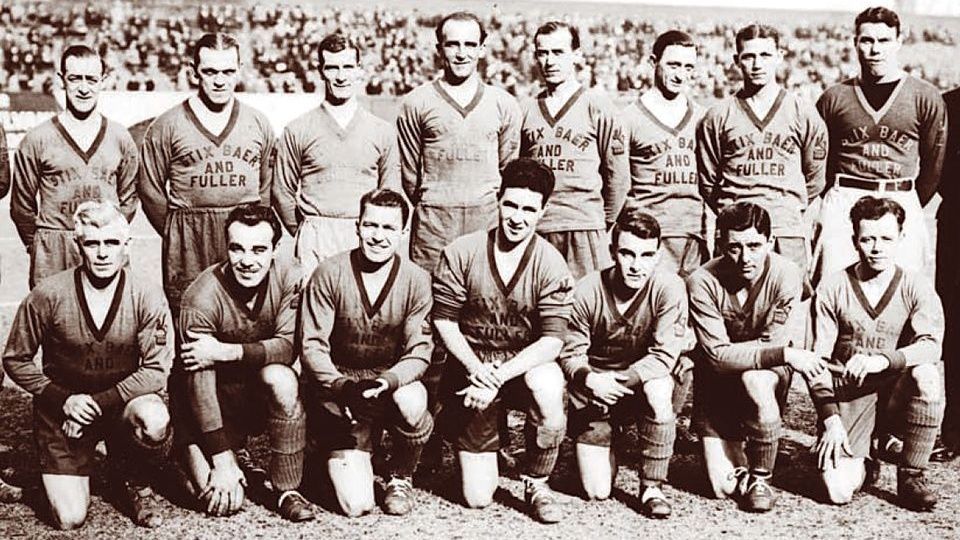
St. Louis stands alongside only New York City in terms of Open Cup significance and impact. The city boasts 10 titles through six clubs over the course of nearly seven decades: Ben Millers (1920), Scullin Steel (1922), Stix, Baer and Fuller/St. Louis Central Breweries (1933, 1934, 1935), St. Louis Simpkins-Ford (1948, 1950), St. Louis Kutis SC (1957, 1986) and St. Louis Busch Seniors (1988). Only New York City can claim more Open Cup titles as a city.
Further, St. Louis and New York City are tied for the most Final matches hosted at 24 total. St. Louis' two dozen Finals were scattered across a collection of venues: Handlan's Park, Sportsman's Park, Walsh Stadium, Public Schools Stadium and the still-operational St. Louis Soccer Park—originally known as the Anheuser-Busch Soccer Park and now known as the World Wide Technology Soccer Park.
There was always a unique sense of pride associated with representing St. Louis that permeated throughout the early days of the tournament.
“The thing about the St. Louis teams was that they were all St. Louis guys, as opposed to Bethlehem Steel, which drew primarily from the British Isles,” Lange said. “So, there was not just a sense of the city, but a sense of nationalistic pride. When St. Louis finally decided to enter the Open Cup in the 1919–20 season, they had something to prove. They were saying, ‘We're just as good as or better than these teams from the East. We're American. We play our own style. We can do it.’”
That mentality carried Ben Millers, a club sponsored by a local hat company and built entirely of St. Louisans, to a 1920 Open Cup title, sparking an incredible seven-decade stretch of St. Louis dominance in the growing tournament.
“That kind of set the stage,” Lange said of Ben Millers’ victory. “There's always been this feeling in St. Louis: we're St. Louis guys; it's us against the world. We're playing all these teams, many of which are immigrants or have players brought over specifically to play for them, and we can play just as well as or better than they can. That's been a thread running through St. Louis soccer for more than a century, and it has continued right up to the present.”
As national attention and the geographic footprint of the Open Cup continued to grow in the early 20th century, clubs from St. Louis continued to shine on the national stage. After Ben Millers’ victory in 1920, the next four Open Cup Finals featured a club from St. Louis. After St. Louis Scullin Steel captured the Open Cup crown in 1922 during three consecutive trips to the Final, a dynasty emerged.
In the 1930s, the Open Cup was dominated by a short-lived St. Louis club. Known by many names due to the rapid rotation of local sponsors—Hellrungs or Stix, Baer and Fuller or St. Louis Central Breweries or the St. Louis Shamrocks—the club only existed from 1929 to 1938 but undoubtedly made the most of its brief existence. Between 1932 and 1937, Stix, Baer and Fuller advanced to six consecutive Open Cup Finals, winning an unprecedented three consecutive titles (1933, 1934, 1935) in the process.
A decade later, it was St. Louis Simpkins-Ford winning it all in 1948 and 1950, followed by St. Louis Kutis SC winning the first of its two titles in 1957. Though St. Louis teams continued to dominate national competitions like the USASA Amateur Cup during the middle of the century, Kutis’ 1957 Open Cup triumph served as a symbolic end to St. Louis’ incredible Open Cup reign. Since 1957, only two teams from St. Louis have won the Open Cup: Kutis added a second Open Cup trophy to go along with their seven Amateur Cup titles in 1986, and St. Louis Busch Seniors won the Open Cup in 1988.
Representing a shifting sporting dynamic in St. Louis and rising competition in other parts of the country, that 1988 Busch Seniors team were the last to bring the Open Cup trophy back to St. Louis.
“The thing about that Busch team is that we're talking about a period when there was no major outdoor league in the United States,” Lange said. “I think in the 1980s, that made the Open Cup even more prestigious, because if you won the Open Cup, you were the national champions. You didn't have the New York Cosmos or any teams like that existing.
“If you won, you were the team.”
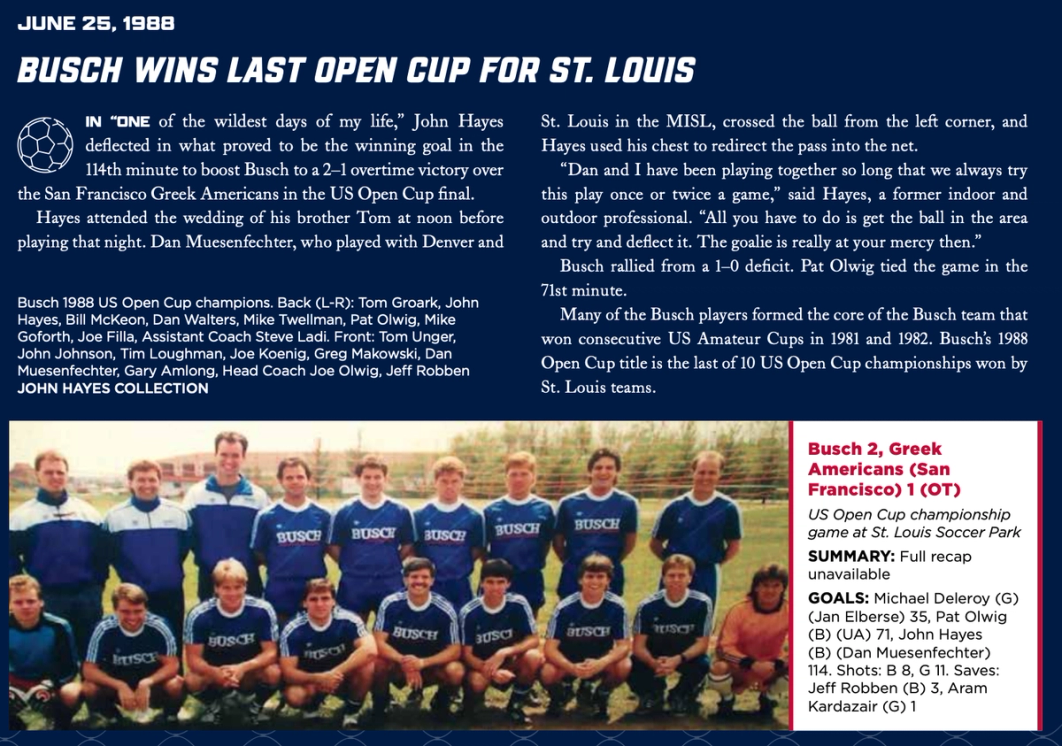
Like many clubs across the country, the Busch Seniors were financially supported by a local sponsor. In the case of the Busch Seniors, it was the city’s largest company—and arguably most recognizable—Anheuser-Busch. Started by former Anheuser-Busch president Denny Long in the 1970s, the club earned a reputation as one of the top senior clubs in St. Louis in the 1970s and 1980s, winning three Amateur Cups before achieving Open Cup glory in 1988.
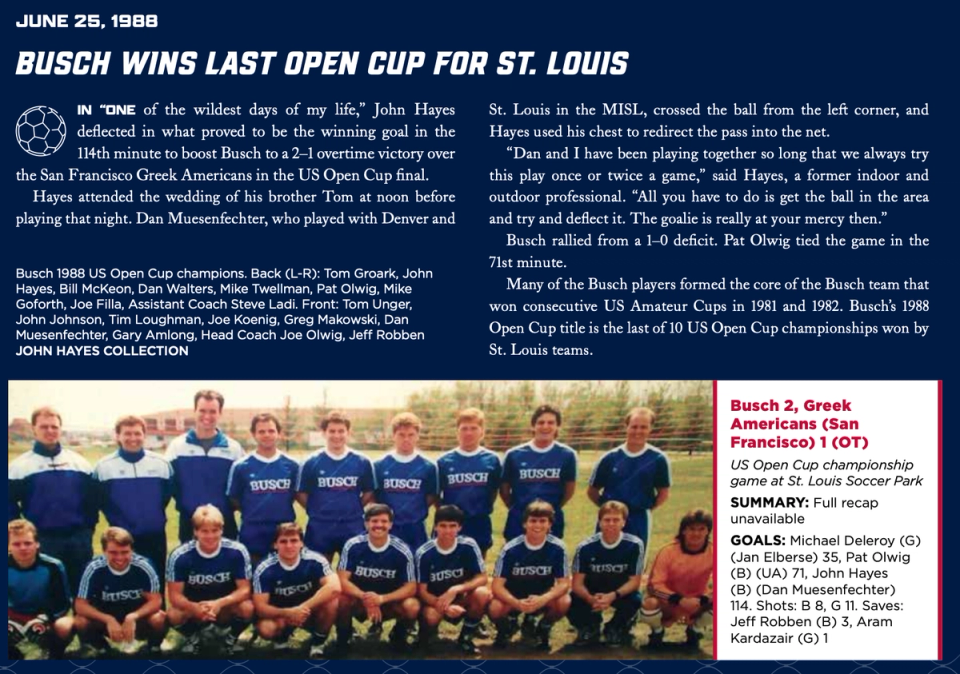
Lange, a former employee of Anheuser-Busch and coach for a Busch youth team, recalls the club’s formation and ascent.
“The brewery was a great organization and treated everybody well,” he said. “It was an organization you wanted to be connected with, and Busch Soccer Club was a first-class organization. It was well-funded and well-connected, with great players. If you were a good player, you either played there or for Scott Gallagher. That's where Busch had built its reputation by the time the Open Cup Final happened. It had been around for some time, and it was one of the places where the best players wanted to play.”
The 1988 team was loaded with talent, and many of its players had been part of the club’s back-to-back Amateur Cup victories in 1980 and 1981. The team featured a mix of local collegiate standouts and former professionals.
Busch’s coach, Joe Olwig, and goalkeeper, Jeff Robben—both members of the St. Louis Soccer Hall of Fame—reflected on how the team’s journey to an Open Cup title.
“The 1988 team had guys who had played professionally,” Olwig recalled. “The NASL had gone defunct, and [the former NASL players] came back because they wanted to play competitive soccer. Then you had some up-and-comers like Dan Walters, my brother Pat Olwig, Johnny Johnson from SLU, Robben from the University of Missouri–St. Louis [UMSL], and Mike Goforth from St. Louis Community College at Florissant Valley.”
“I've said it before: it was the best team I played on, from the standpoint that all the guys were focused on a common goal,” Robben added. “We respected each other's ability, and we blended well. There were no egos on the team. You talk about college guys and ex-professionals, but we were just out to win it. We knew each other. If we did our jobs, we were going to come out on top. There was that mutual admiration club, and it was a fun group to be part of.”
In addition to league and Amateur Cup play, the 1988 Busch team survived a gauntlet of an Open Cup schedule to reach the Final. After advancing beyond a grueling stretch of state and regional qualifiers, Busch faced off against a juggernaut of a New York Pancyprian-Freedoms side that had won three Open Cup titles between 1980 and 1983, subsequently qualifying to represent the United States in the Concacaf Champions Cup on three occasions.
“We went into it with an underdog attitude,” Olwig said of the Semifinal. “We were confident in our abilities, our skill and our tactical approach. I think that's a common theme with St. Louis teams in general. We want to be the underdog. We want to outwork the other team. We want them to take us for granted a little bit and not respect what we can bring to the game.
“Even though we had a wide variety of ages on the team, a lot of the time we felt like we were playing men against boys. We had a lot of players who weren't big guys… But we were playing against men in their 30s, physically imposing players.”
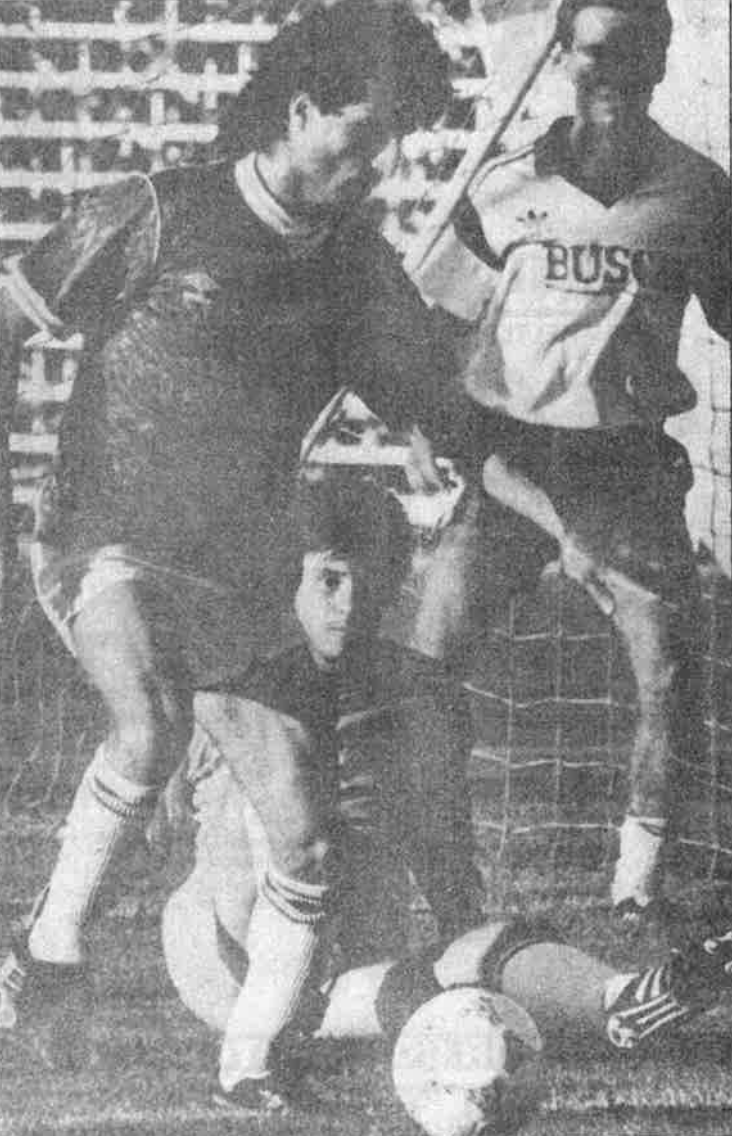
The size and experience advantage presented by New York ultimately proved insignificant, as the spunky Busch Seniors side shocked the Freedoms, 3-2, thanks to a Greg Makowski brace against former New York Cosmos goalkeeper Hubert Birkenmeier.
“I’ll be honest, I overestimated their team,” Olwig told local reporters after the Semifinal victory. “We really tried to prepare our players that we were the underdogs and they were the more skilled, experienced team. [Jeff] Robben was saying, ‘I think they were really off their game for the first three quarters.’ They were frustrated mostly because of the way we played. We slowed it down and really knocked it around. The last 15 minutes [New York] really showed their quickness and did some good stuff.”
From there, a conclusive and consequential clash at the St. Louis Soccer Park loomed large. The Busch Seniors were set to face 1985 Open Cup champion San Francisco Greek-American AC, which was seeking a second Open Cup trophy.
“Thanks to Dave Lange, we had some publicity in the local paper,” Olwig remembered. “But just getting to the Final at home, at the Soccer Park, in front of family and friends, was special. We knew the history. The stands were full of former players who had won Open Cups, Amateur Cups or national championships in college.”
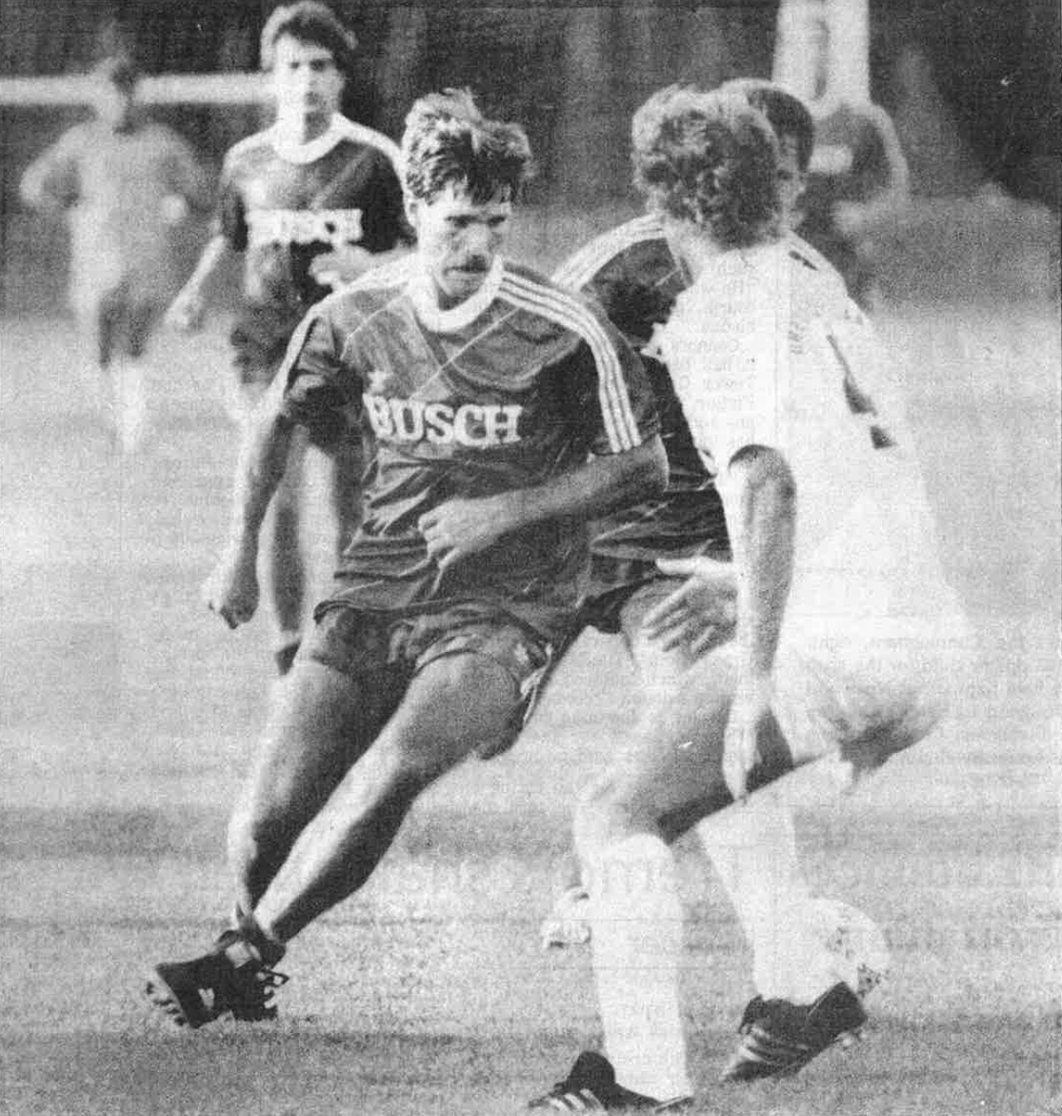
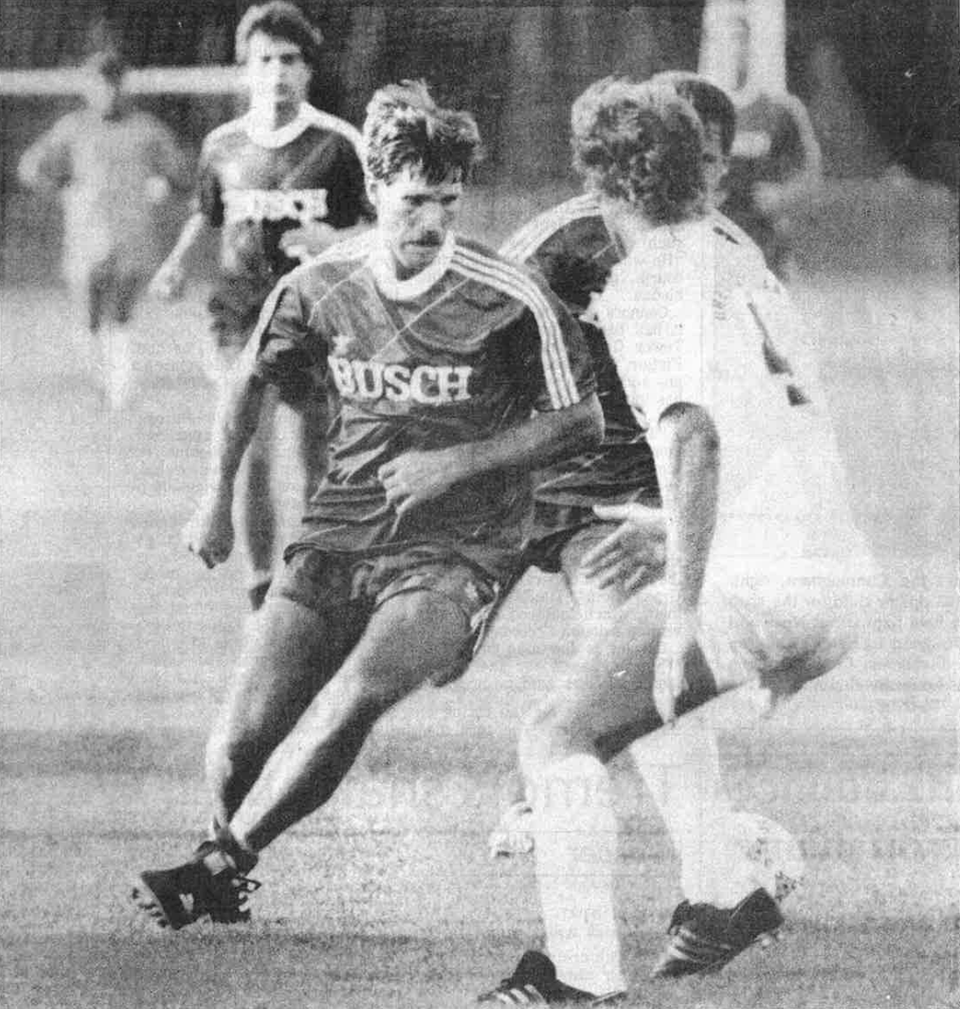
The Greek-Americans struck first through Michael Deleroy, clinging to a 1-0 halftime lead in St. Louis as Busch were unable to capitalize on their chances in front of goal. The second half swung in the hosts’ favor, as Pat Olwig gathered a Greg Makowski pass and slotted home the much-needed equalizer in the 71st minute.
Busch hung on for 19 more minutes to force extra time with the scoreline knotted up at 1-1. An opportunity for at least 30 more minutes was relieving, but the prospect of the golden goal format was daunting, Olwig recalled: “Golden goal is never fun. It's kind of cruel when you think about it, but we were very fortunate.”
Fortune did favor the hosts. John Hayes—who had made it back to the Soccer Park after attending his brother’s wedding earlier in the day—scored the trophy-clinching goal in the 114th minute with a chested finish.
“It wasn't the prettiest goal,” Olwig said. “Dan Muesenfechter got the ball across to John Hayes. They had probably worked on that near-post run a thousand times before. The ball came up, hit John in the stomach, and went into the goal.
“It was golden goal, and we won. I just remember the crowd going crazy. Our family and friends were behind us in the stands. It was a special time because we knew we had accomplished something. Even at that point, we didn't realize how big a championship it was, but it was a relief to win it.”
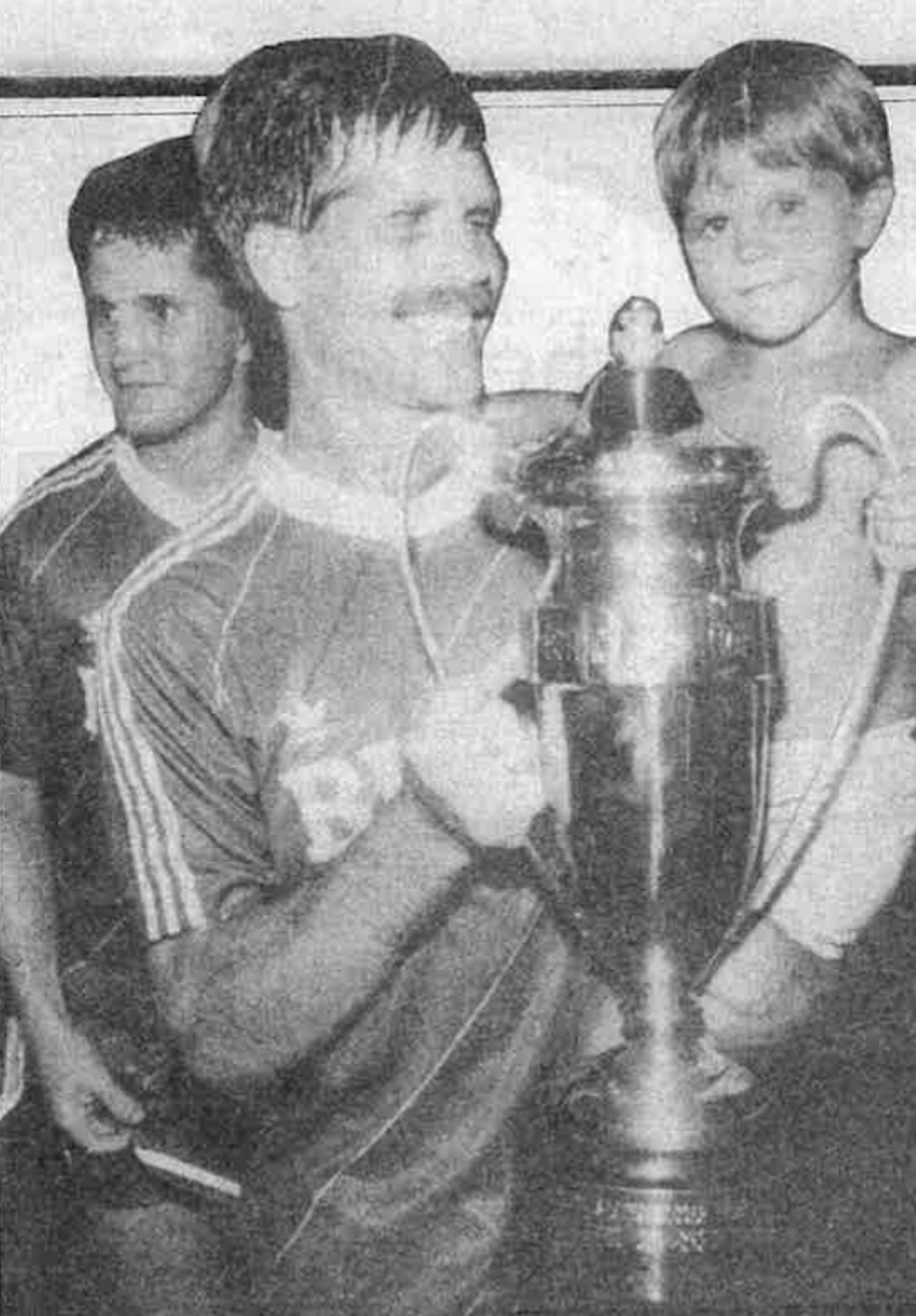
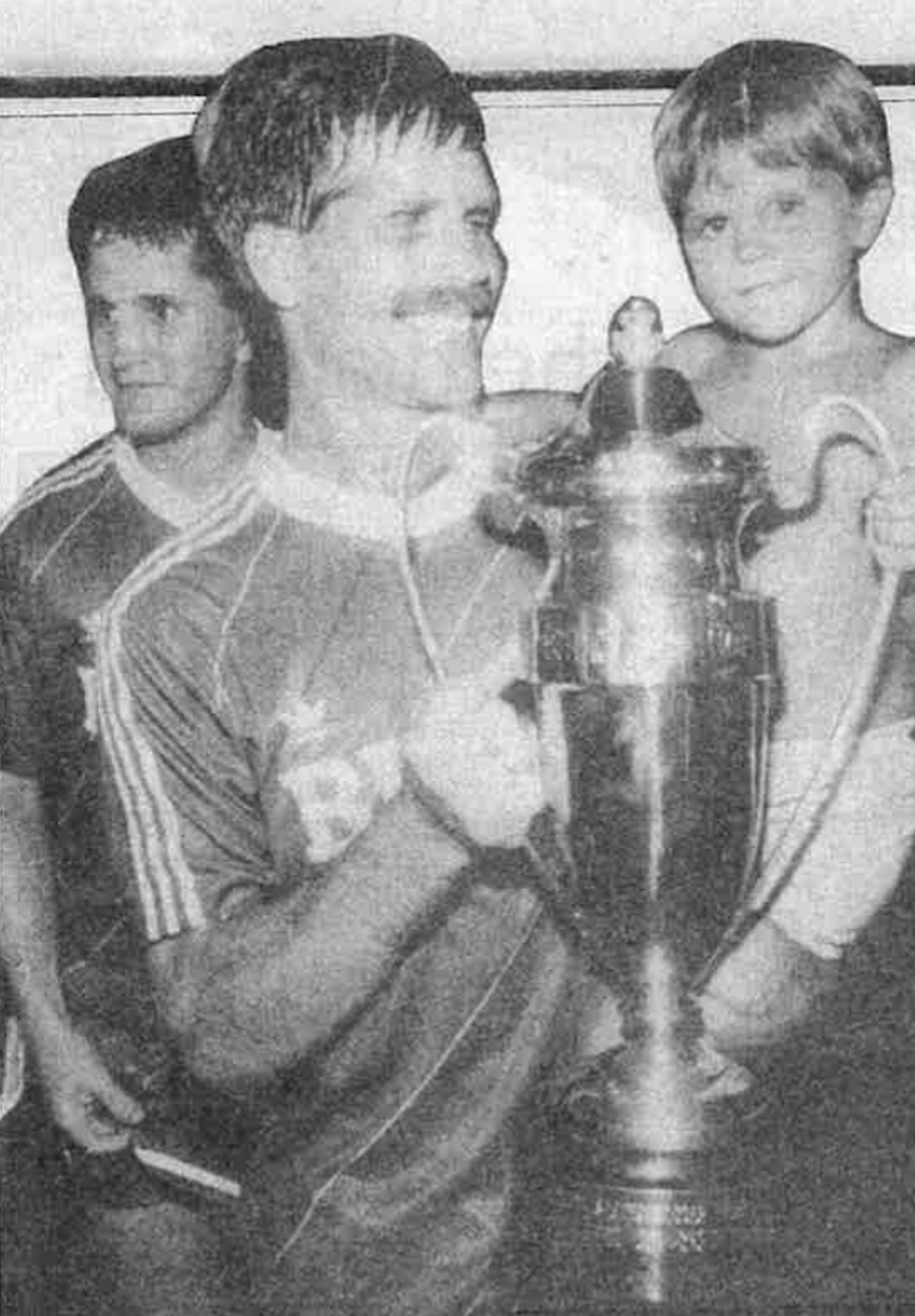
Robben—who made several crucial saves against the Greek-Americans—was more than relieved the match would not be decided from the penalty spot: “It was a great day. I remember it being a great day, and I remember the relief of the game ending with a goal. You get that far, and you hate to go to penalty kicks to win it.
“It was a fantastic day, just an awesome day. It was quite a relief, to be honest with you, because we had gone so far, and seeing it through was huge.”
Nearly four decades after their triumph at the Soccer Park, the Busch Seniors’ legacy remains visible in St. Louis. The majority of that 1988 team are still around town, continuing to grow the game as coaches of the next generation of stars and as fans of their new MLS team. The legacy of soccer in St. Louis—from its sizable USMNT contribution to its 10 Open Cup-winning teams—is still apparent if you know where to look.
“If you're from St. Louis, chances are you've either played or gone to a game at the Soccer Park,” Lange explained. “If you go there on a Friday night, it's complete madness. Thousands of kids are playing. You can't find a parking place.
“On the Hill [neighborhood], there's a mural dedicated to the 1950 [USMNT World Cup] team and all the St. Louis guys. Four of the five starters were from the Hill, with Harry Keough being the fifth guy. There's also a life-size mural of Becky Sauerbrunn in one St. Louis neighborhood. There are a lot of tangible signs of the legacy. Probably the most telling evidence is that soccer is played here by thousands and thousands of people.”
The city is still actively adding to its rich soccer history thanks to the contributions of Lange, Olwig, Robben and generations of other players, coaches and supporters continue to add to the city’s soccer history. St. Louis CITY SC’s run to the Open Cup Final represents the next chapter of that story, and the city’s soccer-savvy supporters recognize that.
It just means more in STL. #AllForCITY x @opencup https://t.co/tZLO998pBV
— X - St Louis CITY SC (@stlCITYsc) September 16, 2026
“You're talking about people who are very knowledgeable of the game and very supportive of what they see,” Robben said. “They recognize the talent and the ability and the direction that the team is going in and can appreciate that and the hard work it takes to do that.
“A St. Louis fan is one of those fans who says, ‘Don’t try to pull the wool over my eyes. We know what we see.’ What they’re seeing now is a quality product, and they’re behind it. They’re backing it 100%, and they’re super supportive. No matter what it is, whether it’s league play or Open Cup play, they want to see the St. Louis team do well, and they recognize the quality [of that team].”