26 USMNT Moments, Past to Present: Back on the World Stage
U.S. Soccer wins its bid to host FIFA World Cup 2026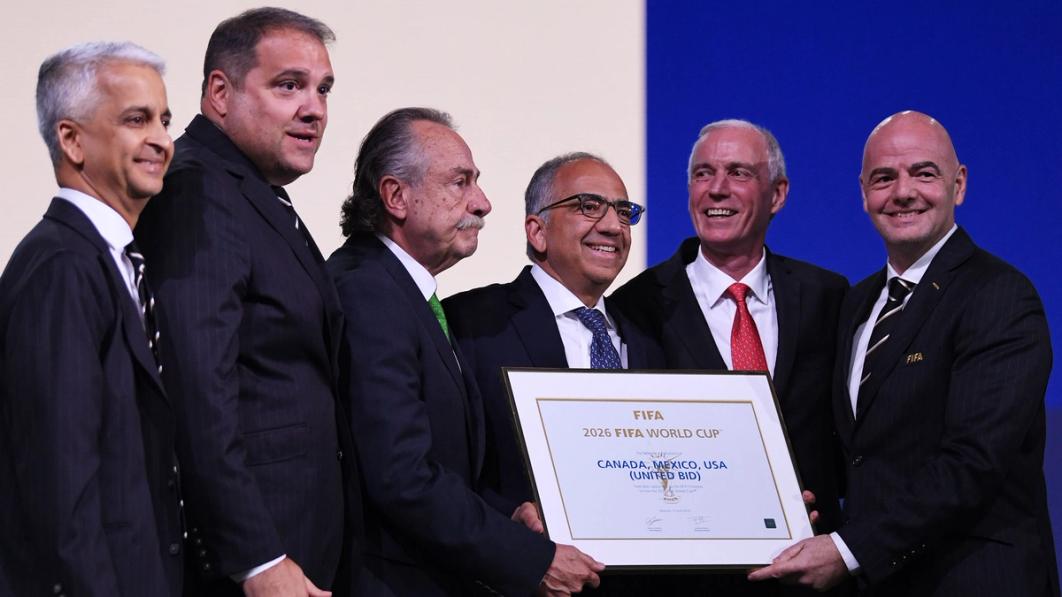
This is 26 USMNT Moments: Past to Present, a U.S. Soccer content series that covers 26 defining moments in U.S. Men's National Team history. From inspired victories to stunning goals, and the stars and hidden heroes who made them possible, each chapter reminds us that our dreams on the pitch are worth chasing. Together, they’ve built toward the biggest moment yet: the 2026 World Cup on home soil.
As the saying goes, it’s always darkest before the dawn.
Back in 2017, the U.S. found itself clouded in disappointment. The U.S. Men’s National Team had just fallen short of expectations and failed to qualify for the 2018 FIFA World Cup following a stunning 2-1 loss to Trinidad and Tobago. The result meant the Americans missed the global tournament for the first time since 1986.
That pivotal moment inspired deep reflection at U.S. Soccer, a moment of reckoning that many organizations have faced before when coming up short. In this case, when the Federation looked itself in the mirror, it didn’t see apathy or resignation.
It saw ambition.
Because at this exact same time, the U.S. was in the process of building toward a hopeful and bright future. Earlier in 2017, U.S. Soccer announced a bold plan to host the FIFA World Cup in 2026, alongside neighboring countries Canada and Mexico. So, the timing of missing one edition of the sport’s biggest tournament came hand-in-hand with playing the vital role of hosting another.
A tournament of this scale on a global stage would mean incredible opportunities for the three nations – the U.S., Canada and Mexico – that submitted the joint bid known as “United Bid.” But with disappointment still fresh on the minds of American soccer fans, the task felt like an uphill climb. The U.S. just failed to participate in one World Cup. Would it be ready to play host just eight years later?
Submitting a bid to FIFA is an extensive process consisting of five stages: strategy and consultation, a written declaration of interest, bid preparation, bid evaluation and the final decision.
For the United Bid, the process began with the bold plan:
“We have a vision for growing the game and engaging fans as never before,” said Sunil Gulati, United Bid chairman who served as U.S. President when the bid was announced. “Our biggest challenge will be finding ways to honor the enthusiasm of all the people across Canada, Mexico and the United States through the development of our united hosting concept.”
The United Bid went through the strategy and consulting stage, submitted their declaration of interest, then set to work to prepare the plans, known as the “Bid Book.” This book is similar to how cities submit bids to host the Olympic Games. It’s essentially a detailed master plan, a thorough proposal that maps out training sites, stadiums, host cities, infrastructure, accommodation, safety during the tournament and more.
Initially, 41 cities across Canada, Mexico and the United States jumped at the chance to be considered as host cities for the proposal. The United Bid committee whittled the list down and identified 32 potential cities. This would eventually be pared down even more to the 11 American, three Mexican and two Canadian cities that serve as the host sites in 2026.
Some of the cities that initially applied included Charlotte, N.C., Cincinnati, Ohio, Nashville, Tenn., Tampa, Fla. – cities with deep soccer roots and home to Major League Soccer franchises at one point or another. Although those cities didn’t make the longlist, U.S. Soccer continued to work them. They considered these cities for potential sites to host training base camps for the visiting national teams during the tournament.
As the task worked on the plan, the United Bid also hit the campaign trail. In the Spring of 2018, a small team led by newly elected U.S. Soccer President Carlos Cordeiro traveled the world, building relationships and rallying support, evangelizing the goodwill and bold vision that American soccer belongs on the global stage. Every handshake, every meeting, every vote mattered.
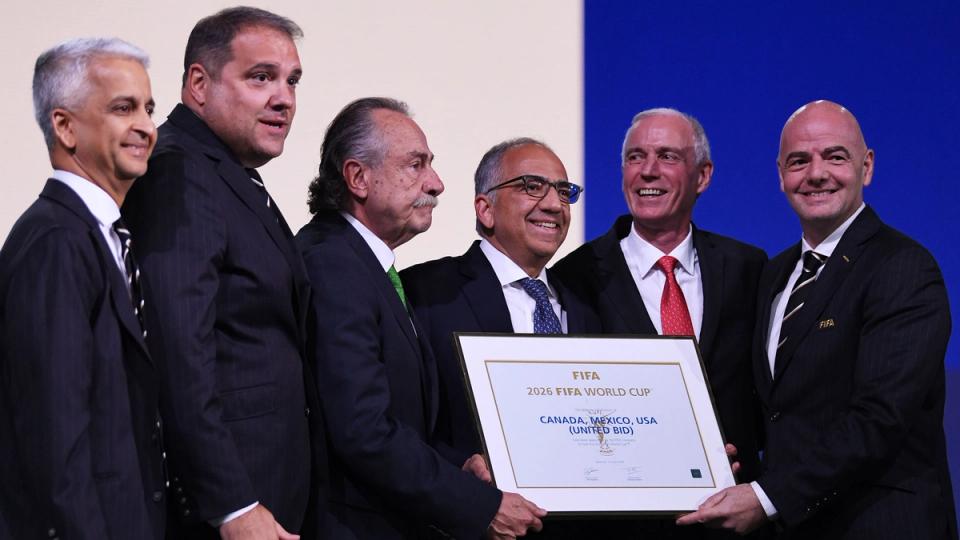
And the effort paid off. The United States, Canada and Mexico won the right to host 2026 FIFA World Cup.
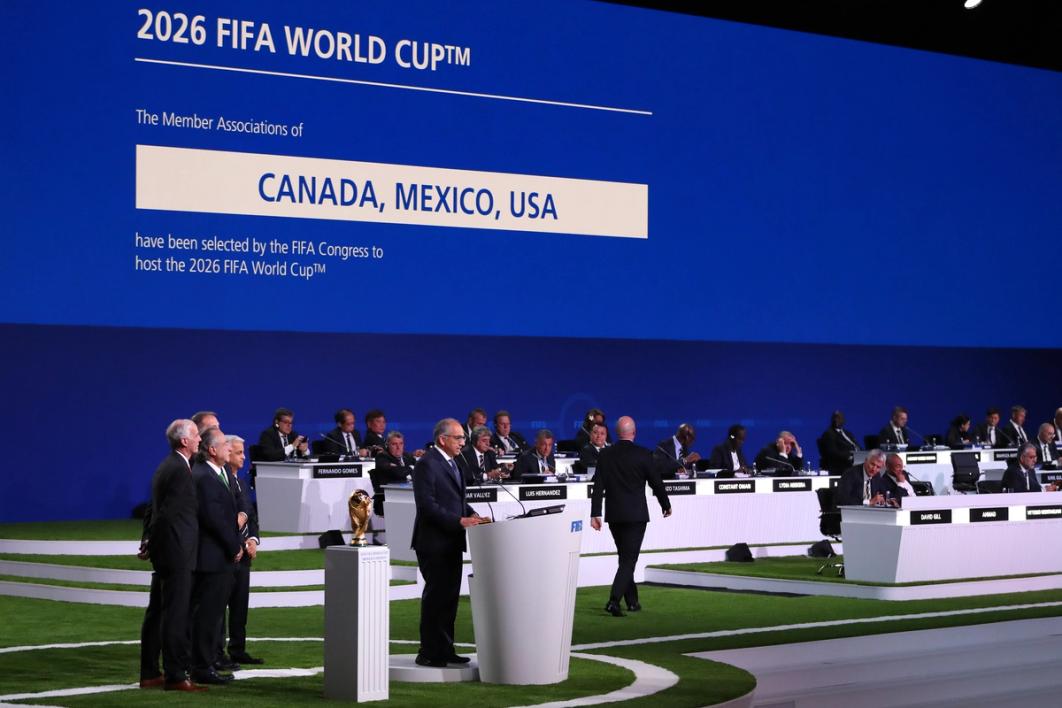
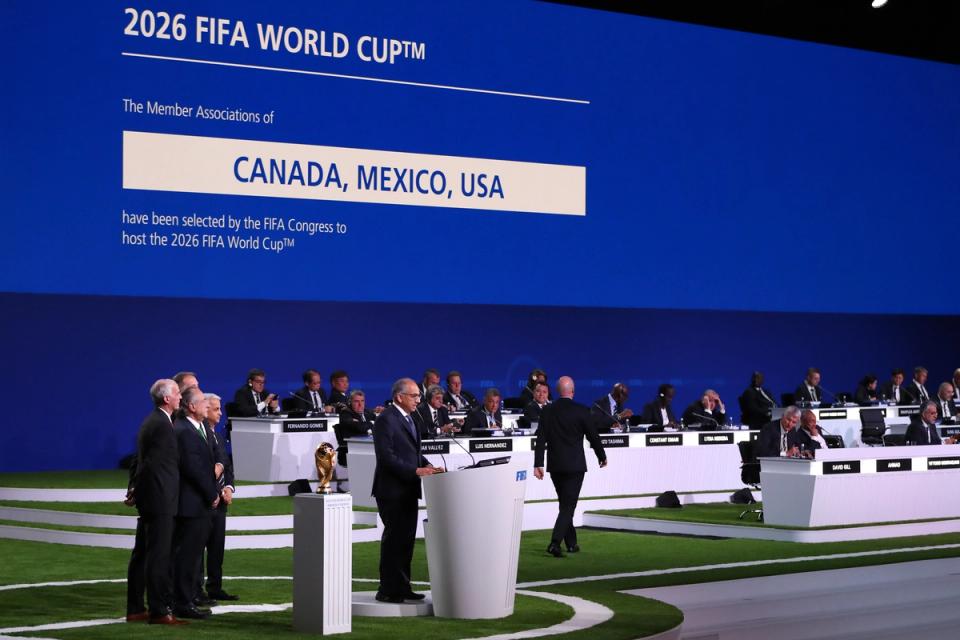
The announcement was broadcast on the eve of the opening match of FIFA World Cup 2018 in Russia. On a grand platform, FIFA President Gianni Infantino went to the microphone to announce the winner. The final vote came down to two bids: the United Bid that featured the United States, Canada and Mexico and the Morocco bid. Morocco’s plan featured 14 stadiums across 12 host cities, and a proposal that emphasized geographic proximity and compactness, and a Final hosted in Casablanca.
“We have a winner for the 2026 FIFA World Cup,” Infantino announced on stage. As he declared Canada, Mexico and the United States the winner, members of the United Bid raised their arms in jubilation and pumped their fists with excitement. Some even appeared to wipe tears from their eyes.
The United Bid received 134 votes or 67 percent of the final vote. Morocco received 65 votes or 33 percent. With 204 valid votes count, the United bid was well within the majority of 101 needed to secure the bid.
Nearly breathless upon arriving to the mic, Cordeiro spoke a few words.
“It’s a bit emotional for us today,” he said before thanking the FIFA president, general secretaries and FIFA family. “On behalf of our United bid – Canada, Mexico and my country, the United States – thank you so, so very much for this incredible honor. Thank you for entrusting us with this privilege of hosting the FIFA World Cup in 2026.”
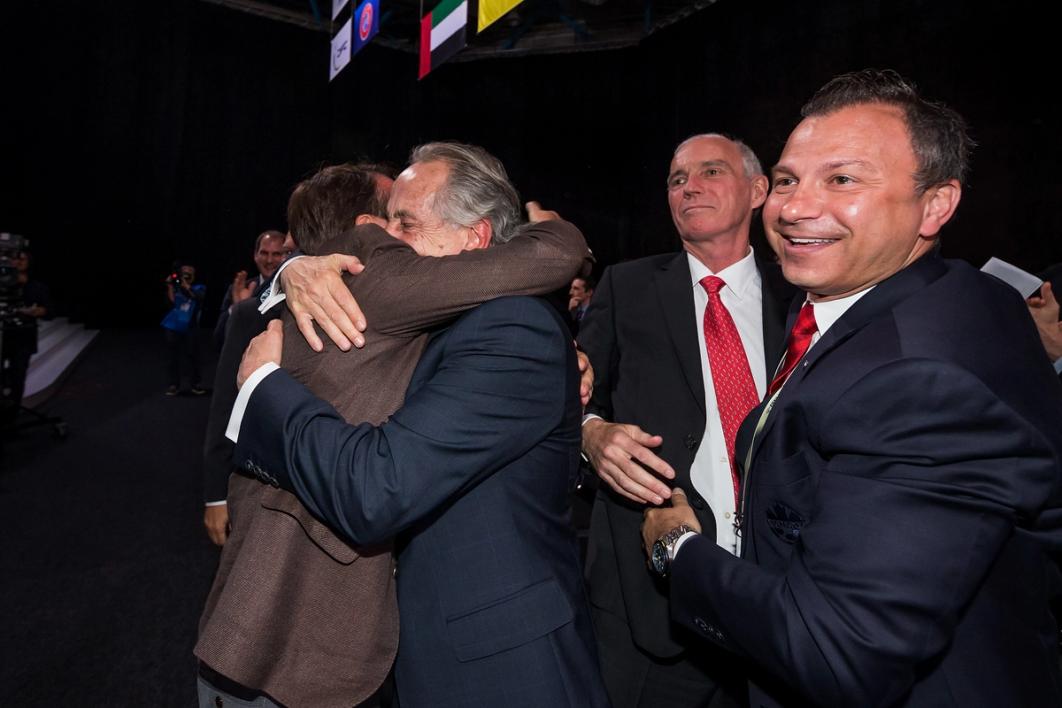
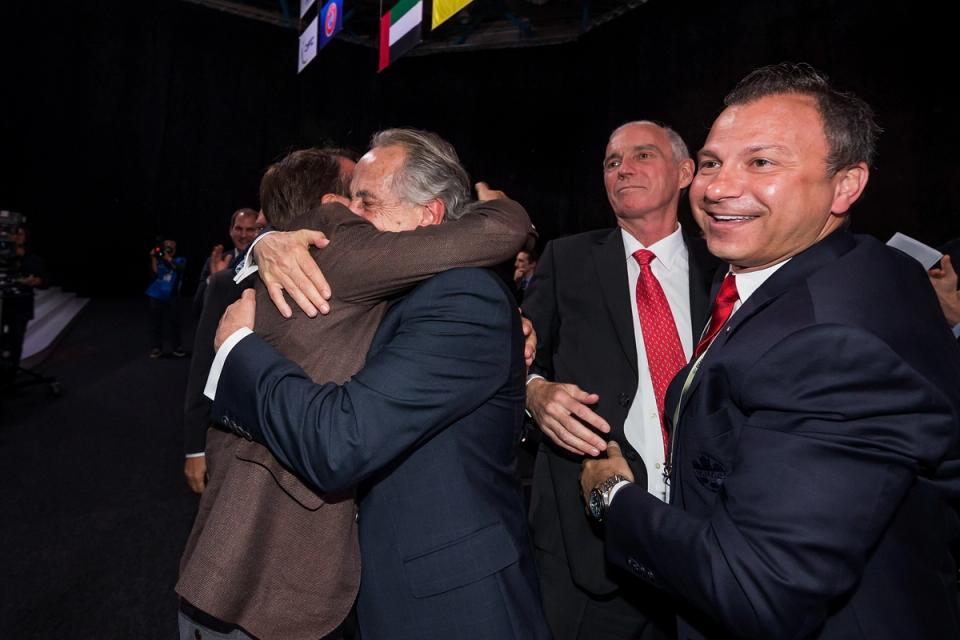
The triumphant moment restored U.S. Soccer’s dream of being a global leader. Just as the World Cup kicked off in Moscow, without the Stars & Stripes on the field, all of a sudden, U.S. Soccer fans had something to look forward to.
American soccer had reclaimed its place on the global stage.
In a matter of weeks, the U.S. went from failure to opportunity. The U.S. would host soccer’s biggest event for just the second time in history. The world would turn its eyes to North America and see what American soccer has to offer.
“Hosting the 2026 FIFA World Cup is a rare and important moment to demonstrate that we are all truly united through sport,” said Cordeiro, co-chair of the bid and then-President of U.S. Soccer. “We are humbled by the trust our colleagues in the FIFA family have put in our bid; strengthened by the unity between our three countries and the Concacaf region; and excited by the opportunity we have to put football on a new and sustainable path for generations to come.”
And although Morocco ended up not receiving the bid for 2026, their fifth unsuccessful attempt to play host, the African country’s resilience would later pay off. Morocco was part of the bid alongside Spain and Portugal to host the next FIFA World Cup in 2030.
Because in the words of Cordeiro moments after the United Bid won, “We are all united in football. The beautiful game transcends borders and cultures. Football today is the only victor.”
Soon, the U.S. will reap the benefits of the hard work by that joint committee. All those handshakes, late nights putting together documents and thorough planning goes to show that hard work, and a little belief, can make big things happen.
Sandy McAfee is the Digital Editor at U.S. Soccer and will be covering the U.S. Men’s National Team at FIFA World Cup 2026. Follow her latest updates from the tournament on BlueSky and on USSoccer.com.