Gems at National Training Center Encourage Interaction, Resilience, Inclusivity
A shared dining space at the Arthur M. Blank U.S. Soccer National Training Center will be where National Team players eat meals and interact with other teams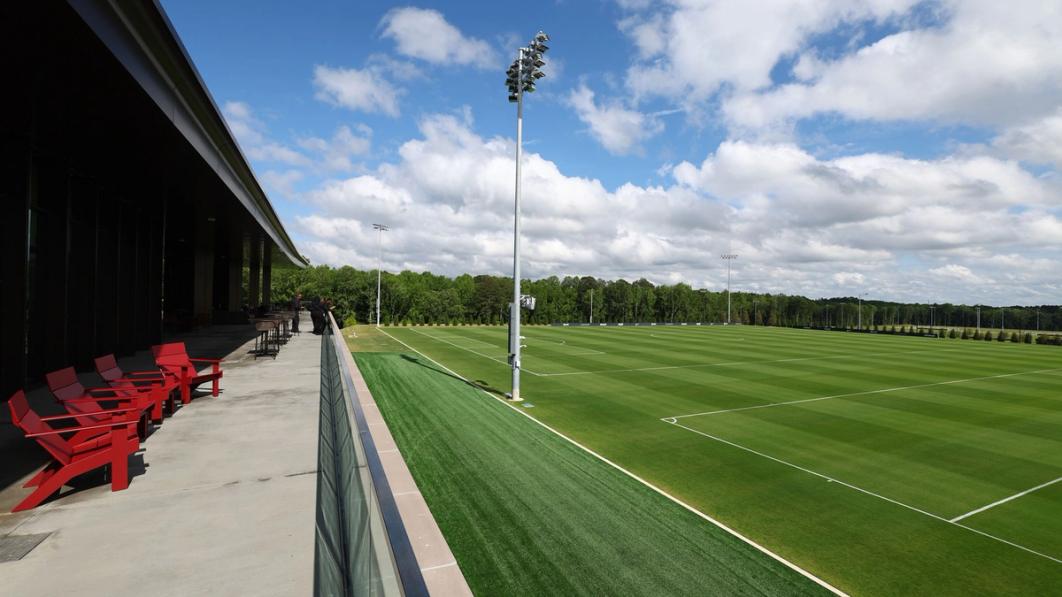
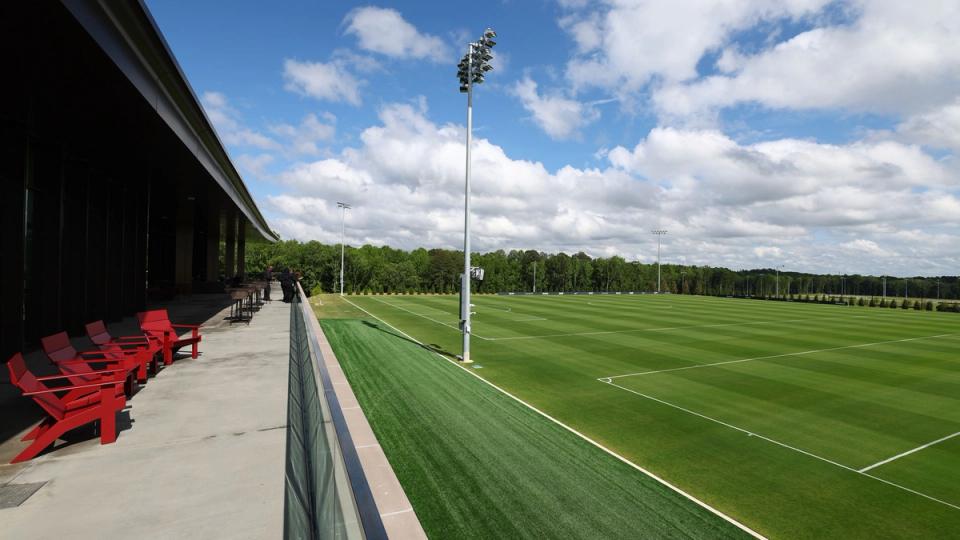
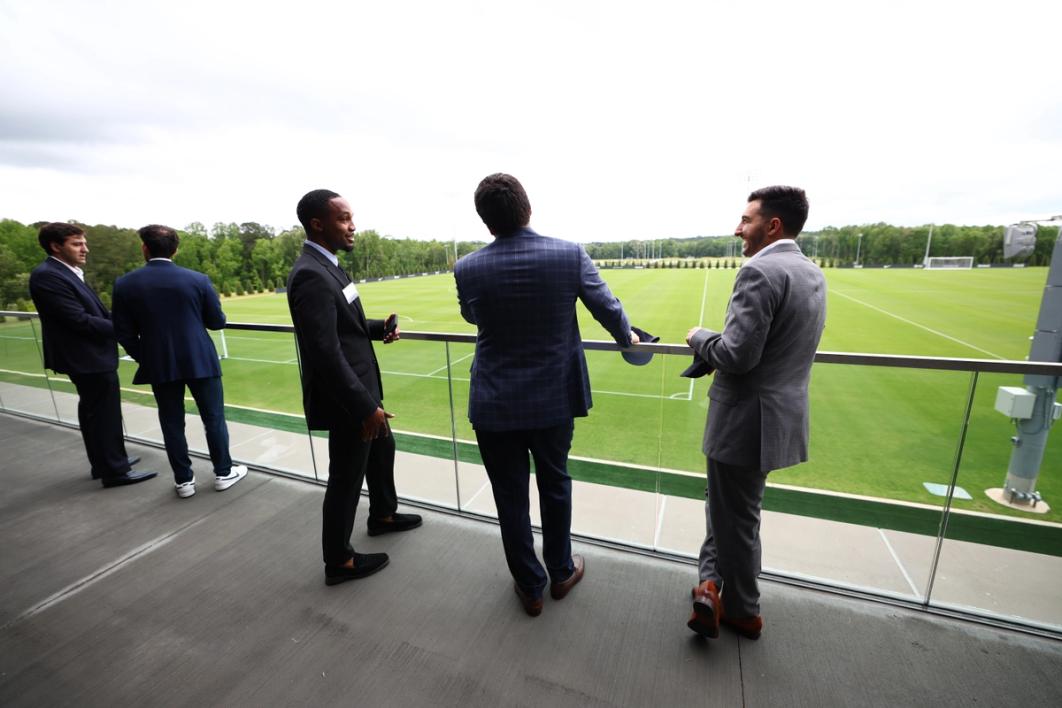
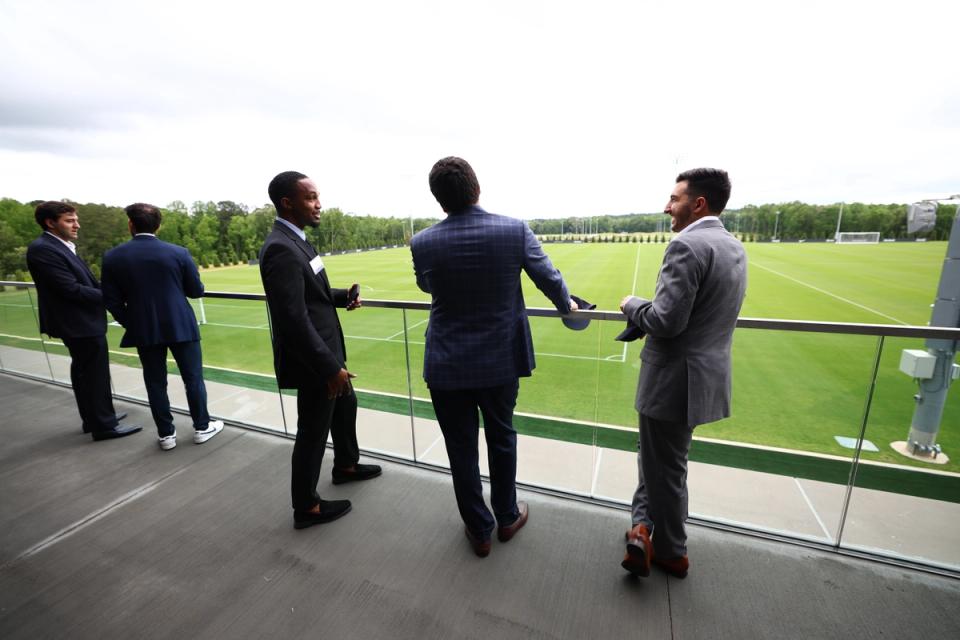
ATLANTA – On the second floor at the Arthur M. Blank U.S. Soccer National Training Center are balconies that face south. From this elevated viewpoint, someone can walk out onto the spacious area and see a wide range of the property – 11 of the 13 regulation-size natural grass fields, some of the 21,000 trees and shrubs planted in neat rows. Soon, that view will include soccer. The second-floor spot, among an already stunning building, is what Brasfield & Gorrie general contractor Tommy Ellis calls “the showstopper.”
Unmined gems exist all throughout the National Training Center. The blue lounge and Chobani Nutrition Zone house coffeemakers and comfortable seating areas. Its counterpart, the red lounge, overlooks the senior national team “super pitch” and is attached to one of the most comfortable spots of the building: a deep overhang and porch where staff can work on their laptops while watching some soccer. There’s an abundance of floor-to-ceiling windows throughout the building, so daylight streams in from everywhere.
Many details like these are part of the 200,000 square feet worth of indoor space. All of it lends to the building’s purpose and the Federation’s mission: to serve as the home of soccer in the United States for the entire ecosystem.
“We’re working day in and day out to make it our home,” U.S. Soccer President Cindy Parlow Cone said during media availability on Thursday. “It was a way of bringing the entire soccer community together, whether you're a six-year-old playing soccer for the first time, a senior national team player or anywhere in between.
"This facility was built for all 27 of our National Teams and for the entire soccer community,” she added. “Now our job is to make sure everyone who walks through these doors feels like it belongs to them."
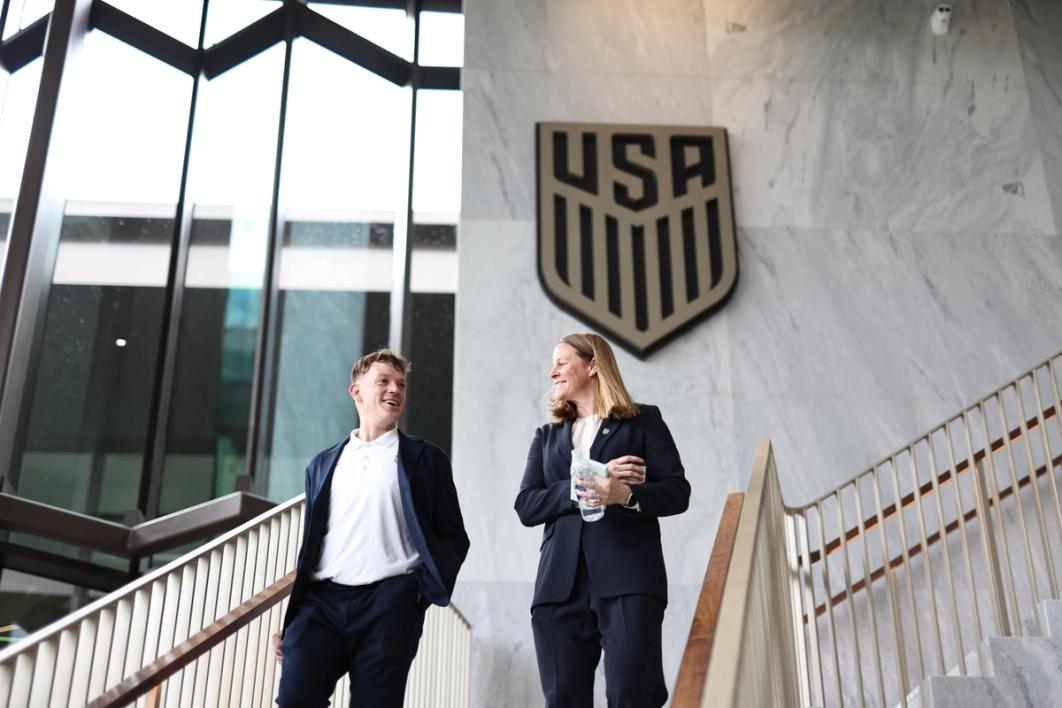
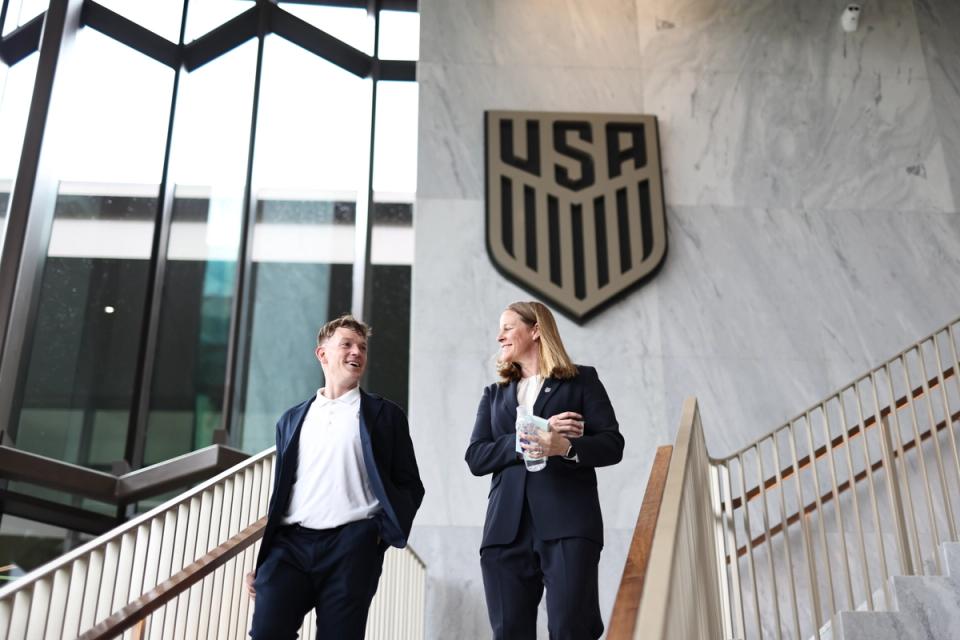
One of the most common areas of the building where this will come to life is the dining area on the first floor. Design Director Andrew Jacobs from Gensler, the architecture firm that led the design of the National Training Center, describes this area as a “hub of activation,” which will be a great place for interactions.
“The dining area is intended to be the hub where all these serendipitous interactions between user groups and teams occur,” Jacobs said. “The U-15s have an opportunity to see Trinity Rodman come through and grab dinner and eat in the same space as them. That awareness that they're in the [same] building does something.”
Rodman’s head coach at the U.S. Women’s National Team, Emma Hayes, agrees. She said that the National Training Center offers visibility and accessibility for the younger generation, not only here in Georgia but also around the country.
“It's one thing to aspire towards the national team level, but to aspire to a pro level first is equally exciting for kids up and down the country, to want to be the next Emily Sonnett or Riley Jackson or whomever that might be,” Hayes said. “They're not just remote characters that live over there once every four years. They're actually here in our backyard.”
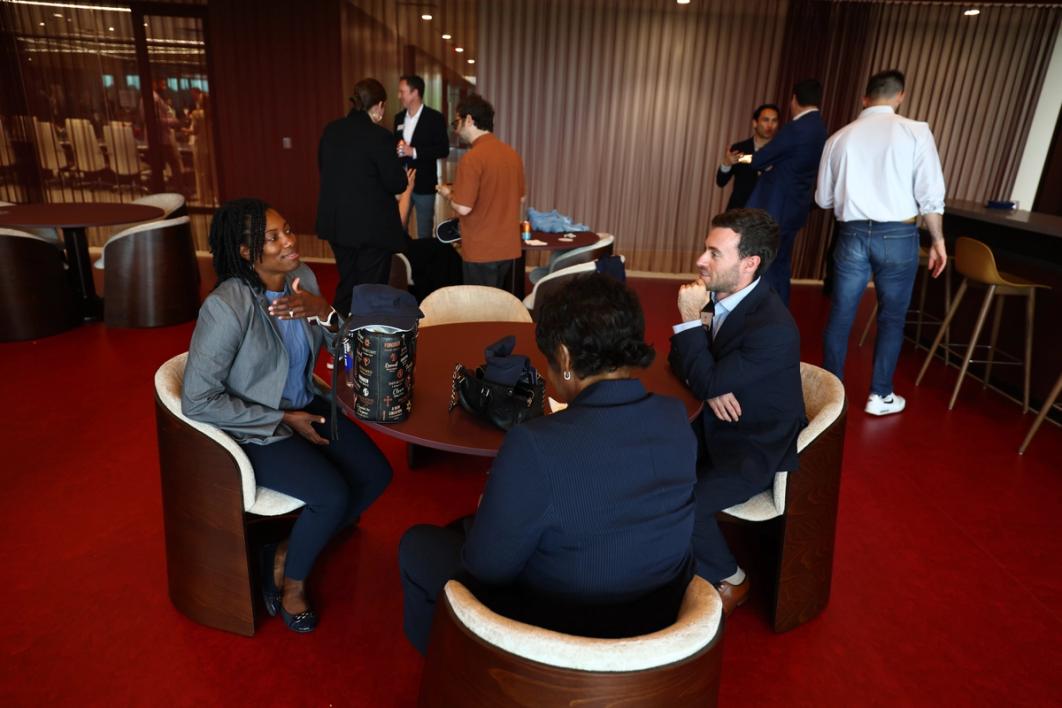
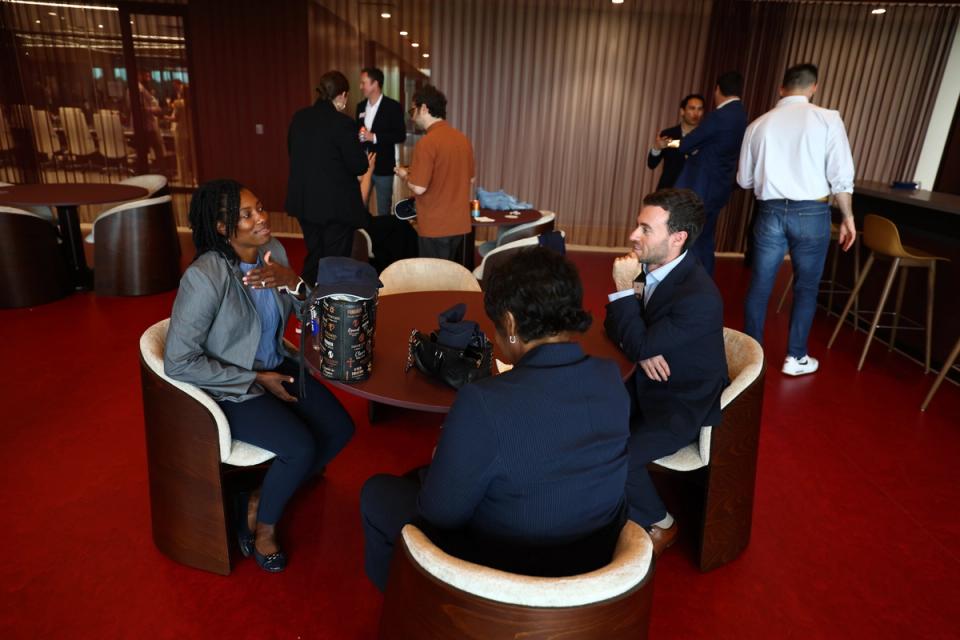
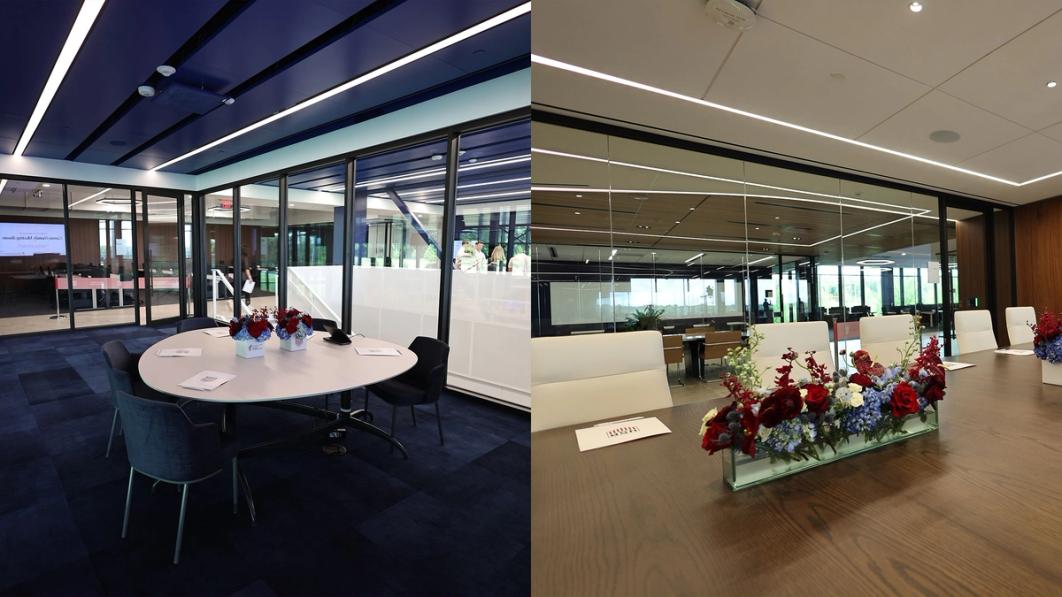
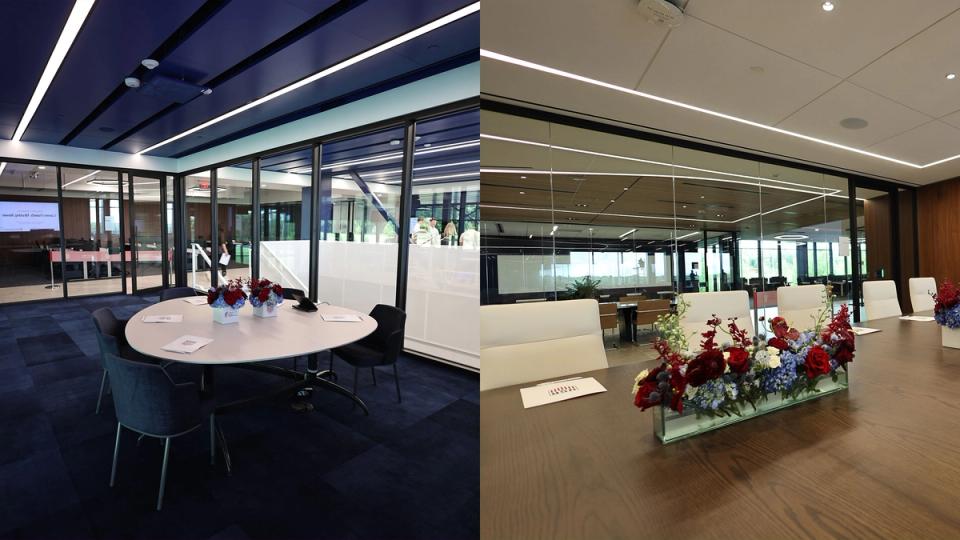
Different teams at the Federation will now be under the same roof, and that applies to the staff as well. Some 400 Federation staff members – from various departments including coaching, refereeing, commercial and more – will have access to 19 meeting rooms. The spaces vary in size from “huddle rooms” for small groups to larger conference rooms that can hold 15-20 people.
And just as a player might need to dedicate some time to individual technical training, individual space exists for staff. Single “focus rooms” are set up throughout the building to allow for personalized concentration when the need arises to grind through a PowerPoint presentation or edit a video for social media.
“You'll have all these opportunities to find your groove in the building, and the building will start to work for you, rather than you just work for the building,” Jacobs said.
Downstairs features day lockers to promote health and wellness for general staff, and the grounds are completely navigable and open to everybody.
“You have this amazingly bucolic campus available to you every day when you show up,” Jacobs said.
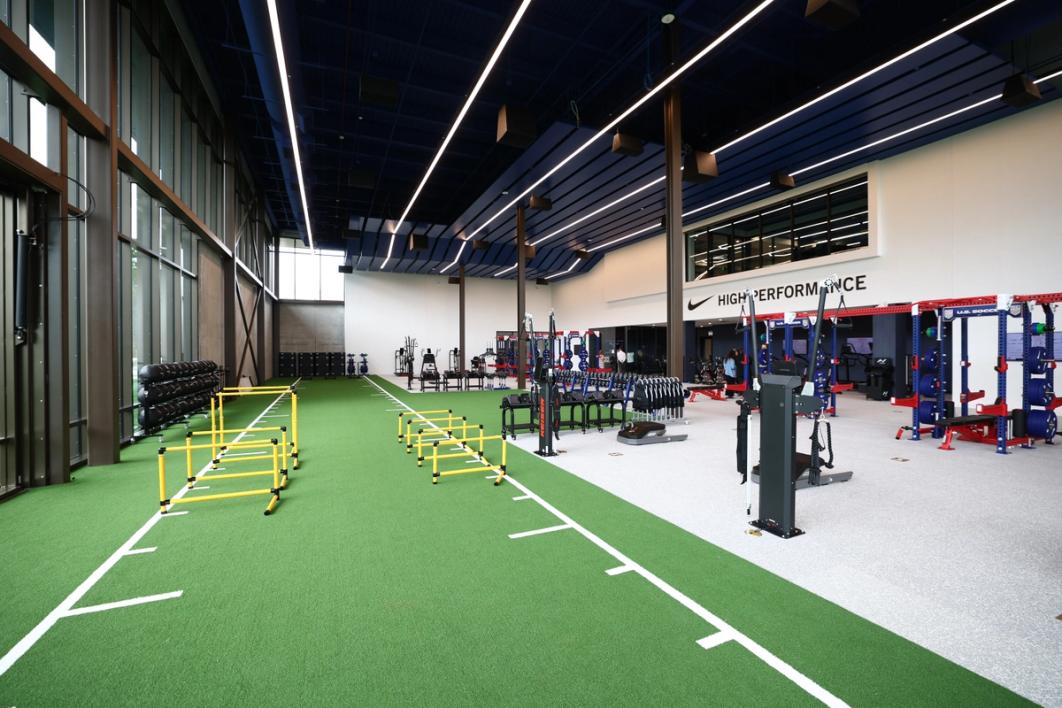
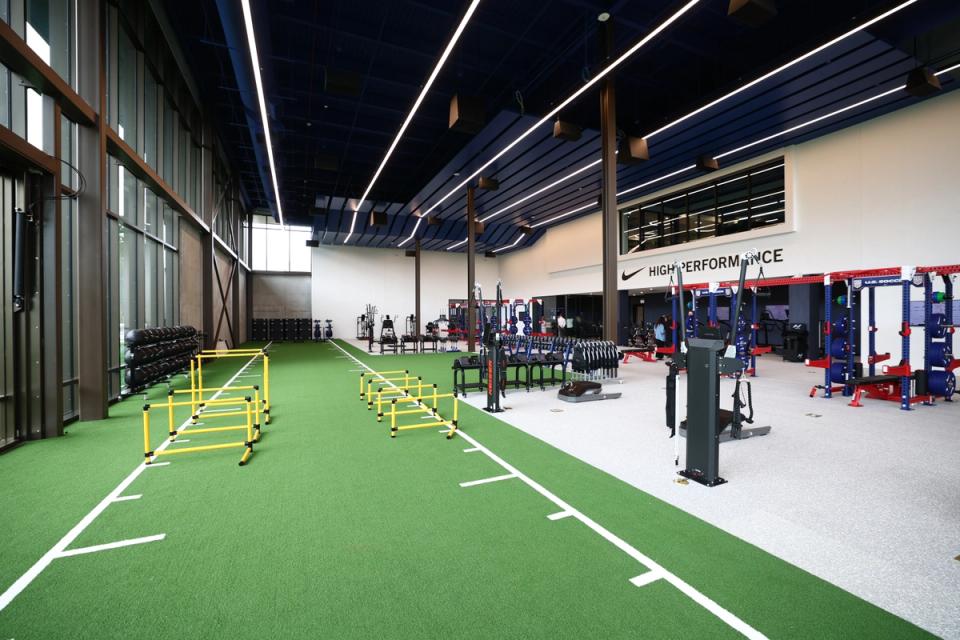
Another treasure in the building is the NIKE High Performance gym on the first floor – although this one is not hard to find. The 10,000 square foot area is sizeable enough for dozens of athletes to train at the same time.
What’s interesting about the NIKE High Performance gym is the flooring. Vulcanized rubber can be found in most weight rooms, but part of the floor in the NIKE High Performance gym is a mixture of bright colors. These teals, oranges and more are part of recycled shoes from the 80s and 90s. They’re integrated into the light grey floor and don’t deter from the shock absorption required for heavy equipment.
“We took opportunities where we could to make sure that we're using improved products that lend themselves to that resilience goal,” Jacobs said.
Soon, U.S. soccer athletes and staff will get to uncover these places for themselves. The building officially opened on Thursday, May 7 in a ribbon-cutting ceremony featuring Arthur Blank, lead donors and U.S. Soccer’s executive leadership. Everyone who’s been part of the process so far – the visionaries, designers and builders – are eager to welcome more people in and let the real work begin.
“As someone who was involved in most every detail, every time I come, I'm wowed anew,” U.S. Soccer CEO and Secretary General JT Batson said. “As excited as I am, what makes me even more joyful is seeing all of our colleagues experience the facility for the first time. Their energy, excitement, smiles and for some of them, tears as they walk in is something they've also dreamt of. It’s pretty darn cool.”